 01
 02
 03
 04
 05
Brighter Future Studio, a strategy and communications studio for complex work in science, climate and frontier technology, wrote this guide. The guide puts the decision and the strategy first, because the brand, the website and the deck all depend on them.
What should you look for in a branding studio for science-led work?
Look for four qualities in a branding studio for science-led work. The studio works from the evidence, starts from a live decision, keeps strategy and design with the same people and builds the materials the decision runs on. Together they let it explain technical work accurately to the investors, corporate buyers and technical reviewers who decide on it.
It works from the evidence
Investors, corporate buyers and technical reviewers test every claim a science brand makes. A good studio asks for the data behind each claim early. It separates what is proven from what is possible, so the story holds up in diligence.
It starts from a live decision
A useful brief names something that has stalled. That might be a raise, a first enterprise sale, a partnership or a launch. A studio that asks who has to act, and what they need to believe first, builds a brand that helps that person act.
Strategy and design sit with the same people
Positioning set by one team and executed by another tends to drift. Look for the same senior people shaping the proposition, the writing and the visual system.
It builds the materials the decision runs on
A science brand gets tested in the investor deck, on the evidence pages of the website and in the launch speech. Ask to see those outputs from past work alongside the identities.
Which kind of branding partner fits your situation?
Which branding partner fits depends on the company's stage and the scope of work. A specialist studio, a generalist agency, a freelancer and an in-house team each suit a different situation.
Which partner fits
- Technical evidence has to reach several audiences, and strategy, identity, website and decks need to work as one systemA specialist studio. Check how much senior time your project gets, and when the team can start.
- The position is decided and the need is broad campaign reach or large production volumeA generalist agency. Check how the team will learn the science and who checks the claims.
- One defined asset on a decided position, such as a landing page or a deck redesignA freelancer. Check who holds the strategy, and who coordinates writing, design and build.
- The position and system exist and the company needs steady contentAn in-house team. Check who can challenge the founder's framing from inside the company.
Many companies combine these. A specialist studio sets the position and system, and an in-house team or freelancer runs it after launch.
Agree which part of the work you are buying
Suppliers use words such as strategy, marketing and communications for different responsibilities. Describe the work your team needs in plain words, then ask each prospective partner to explain its part in it.
| The team's situation | A useful brief |
|---|---|
| Leadership describes several different offers | Agree the priority audience, offer and commercial position |
| Sales knowledge lives in individual conversations | Turn it into a marketing plan with segments, offers, messages, channels and owners |
| An interested buyer needs internal approval | Build the proposal, evidence and explanation the buyer's colleagues need to review |
| Relevant people rarely come across the company | Define the distribution activity and who will carry it out |
| The company has a story suited to industry media | Write a PR brief with the intended audience, evidence and media context |
| Materials describe different versions of the business | Agree shared messages and who maintains them |
Several of these can sit in one engagement. Naming each responsibility makes a proposal easier to assess. A marketing plan should name the first segment, the offer, the evidence behind the message, the channels, the owners and the review points. Follow one activity through the plan, from the person who prepares it to the person who answers when an interested buyer asks a technical question.
Keep responsibilities clear across partners
Bring in outside help when the team needs an independent view of where its story breaks, or specialist writing and design it lacks. Your own people keep the final say on business decisions, technical proof and commitments to customers. A specialist can work alongside an internal team or an existing agency. Your PR agency may own media relationships while another team develops the investor presentation, and internal designers may produce the materials from an agreed narrative.
Agree who owns each activity, who reviews it and who keeps it current after handover. Name one person who resolves disagreements between the owners. The map below records those choices. Fill it in for each studio when you are comparing proposals.
| Activity | Owner | Reviewer | Update owner |
|---|---|---|---|
| Audience and offer | |||
| Technical claims | |||
| Narrative and writing | |||
| Design and production | |||
| Distribution | |||
| Enquiry and sales response |
Check that the handover fits your team
Ask who will use the work and which tools they already use. Include the people who look after presentations, website edits and routine communications in the handover plan. Then test one small update with someone who will maintain the work. They should be able to find the right source file, make the change and know which review it needs before it goes out.
What to ask in a first call
Ask how they would find the problem
Describe what is stuck and listen to the questions that come back. Listen for questions about the audience, the evidence and the decision before any talk of style.
Ask who does the work
Find out which senior people lead the project and who joins them for writing, design and development. Ask how long each person stays involved.
Ask how they handle claims
Ask what happens when a draft line goes beyond the data. The answer shows how the studio will protect your credibility with investors and reviewers.
Ask what they would leave out
A studio that can say which assets you can skip, or which problem sits outside branding, has understood the brief.
How to compare two quotes for a rebrand or a website
Send every studio the same brief, so each proposal answers the same question. For a website, the deep tech website brief gives you one to send. Then lay the quotes side by side in six lines, and mark each line as included, optional or left to your team.
Six lines for comparing proposals
- The decision
Which decision the project has to help, in each proposal's own words.
- Discovery
Who runs it, who takes part and what it involves, such as interviews, workshops or a review of your material.
- Claims and evidence
Which evidence the studio will work from, and who checks each claim against it.
- Outputs and revisions
Each output by name, and the rounds of revision it includes.
- Build and migration
The technical build, the move of existing content and redirects from old pages.
- Handover
Files, templates, training and who maintains the work after launch.
The same label can cover different work in two proposals. Ask each studio what its brand strategy or website design line includes, and what it needs from your team. A lower fee can reflect work your team already holds, such as tested positioning or finished text. Check which lines it leaves to you, and whether your team can do them. Choose the smallest scope that covers the decision in your brief.
How Deep Tech Brand and Pitch Work Is Scoped lists the questions that separate two proposals with the same deliverables. To see who decides what in each quote, How to Compare Branding and Website Quotes gives a four-layer sheet to fill in beneath the six lines.
What are the red flags when choosing a branding studio?
Four red flags show up when choosing a branding studio. A moodboard arrives before questions about evidence, the portfolio looks interchangeable, outcomes are promised or results get rounded up.
A moodboard arrives before questions about evidence
Visual direction set before the proposition is clear tends to decorate the old story.
The portfolio looks interchangeable
Leaves, globes and green gradients across very different companies suggest the studio starts from the sector's visual habits. The distinctive material for a science company usually sits in its mechanism, data and deployment setting.
Outcomes are promised
A studio controls the quality of the case. A raise, a signed buyer or a listing depends on evidence, economics and timing as well.
Results get rounded up
A pilot described as a customer, or a forecast described as a result, resurfaces in diligence. Choose a studio that keeps every claim at the status it holds.
What Brighter Future takes on
Brighter Future Studio is a UK strategy and communications studio for complex work in science, climate and frontier technology. We take on work where the substance is strong and the way it is understood has fallen behind.
Companies, corporate teams and programmes
We work with companies on repositioning, growth, raises, buyer commitments and launches. We work with corporate teams on internal investment cases, board approvals, programme funding and new ventures. We work with programmes and coalitions on shared narratives, funding cases, long-form decision documents and stakeholder communication.
Whole transformations and single pieces
Unibio, Fronterra, ERS and Fair Carbon each ran from strategy through positioning, identity and website, with a deck, a speech or launch work as each case needed. Other clients needed one piece. Gaia AI kept its identity and needed a new landing page. Kanop needed its investor deck rebuilt. A single piece, such as one deck or one landing page, can be the first engagement.
The right problem first
When a stall comes from missing evidence, weak economics, authority or timing, we say so and point to that work first. Our diagnostic guide sets out those cases. When the problem is still unclear, The Belief Diagnosis is a standalone place to start.
Relevant work
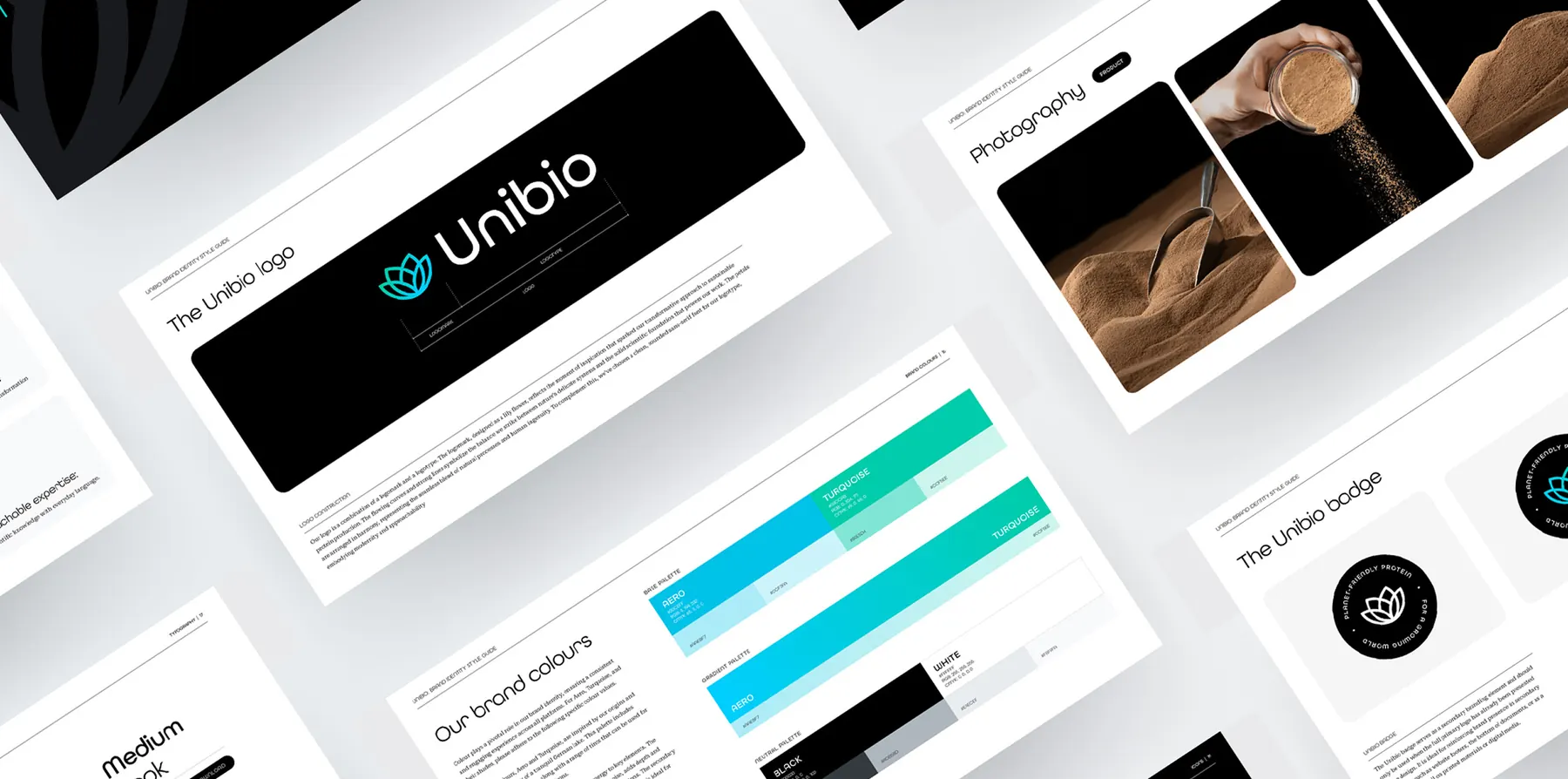
For Unibio, a gas fermentation company, we repositioned the story around the protein product and used the technology as evidence. We recommended a name change for Wildsense and supported the search, and the team chose Ecosystem Restoration Standard. For Fronterra, we rebuilt positioning, identity, website and seed deck on one foundation. Fair Carbon evolved its existing identity with us. For Gaia AI, the work lived in the words, structure and page design.

Frequently asked questions
Should we hire a specialist studio or a large agency?
A specialist studio suits a company whose evidence has to reach investors, buyers and reviewers as one case. A large agency suits broad campaigns once the position is decided. Some companies use both, in that order.
What should we prepare before hiring a brand strategy studio?
Write a one-page note that names the decision the work has to move, who makes it and where it has stalled. Add the evidence behind your main claims, with the status of each, and the material investors and buyers already see, such as the deck, the website and recent proposals. List who on your team will take part and who signs off. Each studio can then scope the same job, and the first call can start on the problem.
How much does it cost to rebrand a climate or science company?
The fee depends on how much the rebrand has to change. A rebrand can be an identity refresh, a repositioning or a full brand system. In a full system, narrative, identity, website and decks move together. Each carries a different fee. Before asking studios for proposals, write down what has changed in the business, which audience misreads it and which decision the work has to make easier. That note lets each studio scope the same job. We agree scope, responsibilities, outputs and fees for each project before work begins. How Deep Tech Brand and Pitch Work Is Scoped sets out what moves the scope.
How long does a rebrand take?
Scope sets the timeline, and we agree scope before work begins. A single piece moves faster than a full rebrand. We rebuilt Kanop's investor deck in two weeks.
Do we need a full rebrand, or can we start smaller?
Start with the part that is failing. Gaia AI kept its identity and changed its landing page. Koralo changed its investor story when its opportunity moved. Our guide to evolving a brand covers the choice.
Where is the team based?
The team works from the UK and Switzerland. We work with companies, teams and programmes across Europe and beyond, in person and remotely.
Who works on our project?
Aaron C. Leaman, founder, leads strategy and storytelling. Catherine Flores, co-founder, leads creative strategy, concept development and design. We bring in trusted writers, designers, developers, motion specialists and science communicators as the work needs them.
Related guides
By Aaron C. Leaman, founder of Brighter Future Studio. Published 29th September 2026.