 01
01

 02
02 03
03 04
04Investor storytelling builds the case a capital decision rests on
Investor storytelling orders the evidence, the market case, the risks and the ask so that someone who believes the technology can also defend a decision to back it. Then it keeps that case consistent wherever an investor or partner meets it.
The technology convinces and the decision stalls
Investors ask detailed technical questions and the team answers them. Then the thread goes quiet, or the committee asks for data on a point the founder thought was settled.
Science-led teams tell the case in the order they discovered it. Investors read it in another order.
Two orders for one case
How the lab tells it
- 01Mechanism
- 02Results
- 03Market
How an investor reads it
- 01Mandate
- 02Market size
- 03The risk that could lose the money
- 04The milestone this round buys
A case told in the lab's order has to be rebuilt before anyone can argue for it. Few have the time.
Check the first break before rebuilding the story
A fund can understand a company fully and still pass for sound reasons of mandate, stage or cheque size. What 16 Investor Interviews Can Teach Founders Before the Next Pitch draws on the 16 investor spotlights in our Library and groups what they said around mandate fit, evidence, risk and the internal champion.
Which problem you have
- The data behind a tested claim is still missingThe work is technical or commercial.
- The evidence exists and investors describe the company back inaccuratelyRebuild the case.
- Investors describe it accurately and still declineCheck fit.
When the answer is unclear, start with the Belief Gap Diagnostic on Aaron C. Leaman's site. Our diagnostic guide sets out the other causes.
Sequence, evidence and risk decide what an investor believes
How we build the case
- Order
We answer a specific investor's or partner's questions in the order they will ask them. A climate fund already accepts the problem, so its case opens on the market failure, and a corporate partner's case opens on its own sourcing, cost or compliance problem.
- Evidence
Each proof point sits beside the doubt it answers. A pilot result retires technical risk, a paid contract retires demand risk, and every claim carries its exact status as achieved, contracted, indicated or forecast.
- Risk
Investors find the open risks either way, so the case names them first.
- Ask
The ask states the amount, the milestone the money reaches and the risk that milestone removes.
The case runs from first contact to the next round
The introduction email, the teaser and the first call set the frame an investor carries into the deck. Each needs the same company definition, customer and figures at a lower resolution.
Much of the decision happens after the pitch. Follow-up answers, the data room and the partner's memo for committee all retell the case, and every figure in them should match the deck. Between rounds, investor updates reported against the milestones named in the last raise become the evidence base for the next one.
The internal champion carries the case into committee
The partner who liked the company presents it to colleagues who know it only second-hand. They ask the questions the founder answered in the first meeting, so the champion needs those answers in writing, in a shape that survives the retelling.
What the champion takes into the room
- One sentence
Defines the company.
- One paragraph
Explains why now.
- One page
Sets out the evidence, the open risks and what the money does.
Where it helps, we draft a short memo in the investor's own format.
Partnership and offtake conversations run on commitments
For Eeden's partnership pitch to a major fashion brand, our pitch strategy put the brand's sourcing question ahead of the textile chemistry. Eeden has said that Brighter Future's pitch development work directly contributed to securing a Letter of Intent. We state the result at exactly that level. The Eeden partnership pitch case study covers the work.
The offtake-capex lock
Aaron co-founded The Decision Room, an invite-led, closed-door capital convening in Zürich where investors, companies and market actors work through live problems. The Eeden work sits inside a dependency he later explored there. Buyers want reliable supply before they commit. Plants need capital before supply exists. Capital wants evidence of customer commitment first.
His essay on circular materials as an infrastructure problem, published in The Backroom Agenda, sets out the lock. The narrative shows each party which commitment moves the other two, and asks for that one.
Relevant work
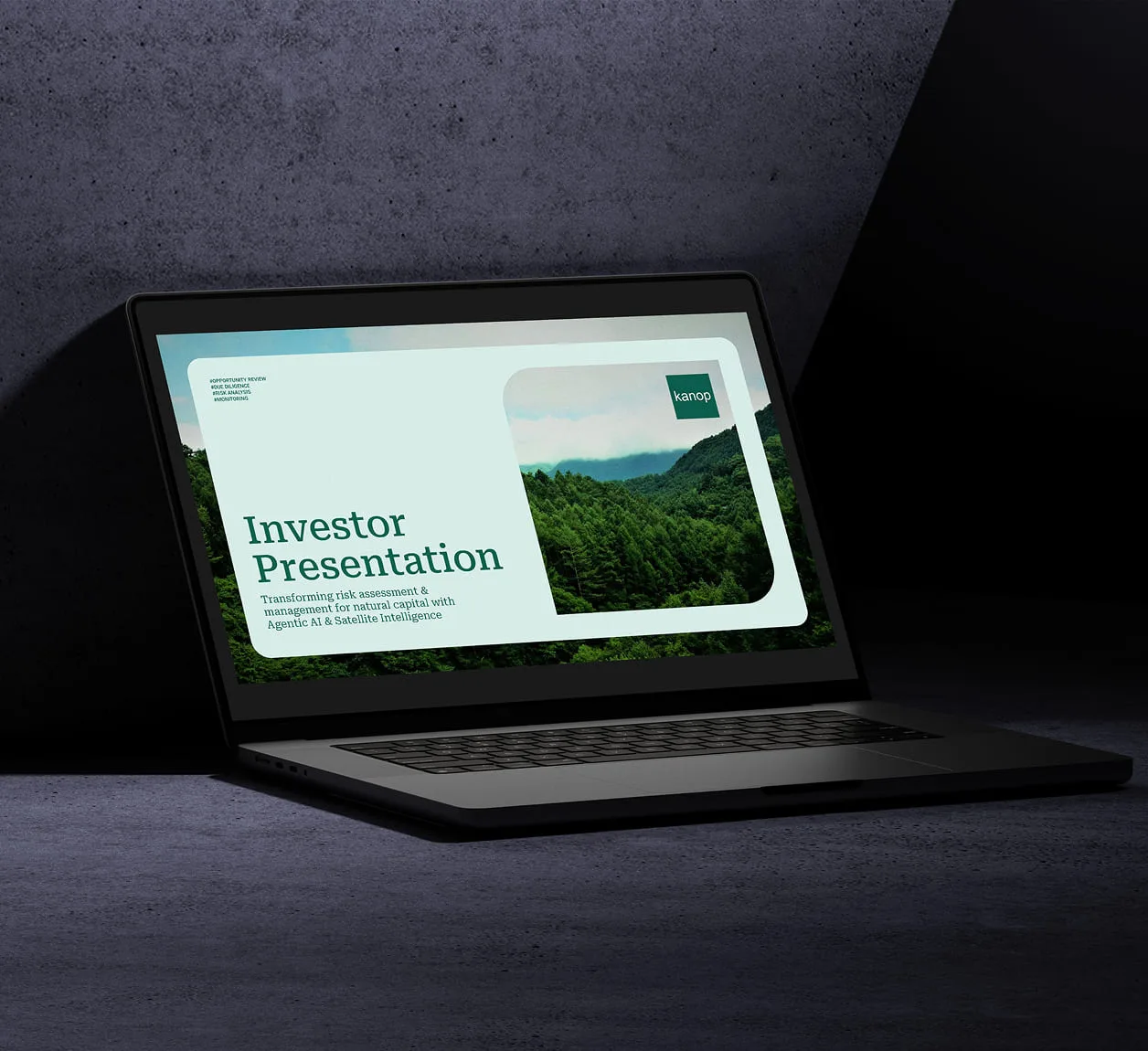
For Fronterra, we rebuilt the seed deck on the same foundation as the website, so the figures and claims hold from first impression into diligence. We developed investor storytelling and presentation design for Kanop's forest intelligence technology and investment case, and pitch development and investor presentations for Agricircle in soil health and agriculture. NewForm Foods, a cultivated meat company, commissioned brand strategy, identity, a pitch deck, a press release, 3D rendering and a website. For Climate Blueprint, a documentary series about climate resilience, we produced an investor presentation alongside the key visual, poster, film elements and website. Our Library holds 110 founder and investor interviews published since 2022.

Frequently asked questions
How is investor storytelling different from pitch deck design?
Pitch deck design produces one document, covered on our climate tech pitch deck design page and in our pitch service. Investor storytelling builds the case that document shares with the teaser, data room, follow-up answers and investor updates.
Can you help with a partnership or offtake conversation as well as a raise?
Yes. A partnership pitch moves through sourcing, technical, legal and finance teams after the first meeting. We build the pitch, the follow-up material and the part of the case each of those teams needs. The company and its advisers negotiate the terms.
When in a raise should we bring you in?
Before the first investor sees the teaser, because the frame an investor forms early is slow to move. We also join mid-process and start from the investor feedback.
Will you make our numbers look better?
We present the figures you have at the status they hold, and your finance team owns them. An LOI described as an LOI tells an investor how the team will report once the money arrives. A rounded-up claim resurfaces in diligence, where the committee is already deciding.
Related guides
By Aaron C. Leaman, founder of Brighter Future Studio. Updated 27th September 2026.