 01
01
 02
02 03
03 04
04Launch strategy makes one story public on one date
Launch strategy decides what an organisation will say when something goes public, then makes sure every person and asset says it the same way on the day. Investors, buyers, journalists, partners and future hires each read a different piece of the launch, and the strategy makes those pieces add up to one organisation. Our launch service covers the full sequence.
A launch exposes the alignment gaps already there
Most organisations carry several versions of themselves. The CEO describes the company one way to investors, sales another way to buyers, and the website still holds last year's version. That costs little while each audience hears only one.
A launch puts every version in public in the same week, and a journalist reading the press release, the website and a partner's post finds three descriptions of one company. A launch plan uses that exposure early, so the gaps surface in a workshop months before the coverage.
Positioning and internal alignment come first
A launch fixes a position in public memory. If the position is still moving, the launch fixes the wrong one. We settle category, audience and proposition with leadership before anyone briefs launch material. See climate tech positioning.
Leadership, the technical team, sales, the board and partners all speak on launch day, so they agree the words first. We run leadership workshops to set direction, then test the narrative with the people who will repeat it. Our guide to rebrand decision rights sets out who signs off.
The narrative comes before the assets
We write and agree the narrative before anyone briefs an asset. When a team briefs the press release, deck and website in parallel, each writer settles the positioning inside their own draft, and the rework lands in the final fortnight.
The launch narrative is a short document that every asset and every review works from. It draws on the organisation's origin, purpose, vision, customer, product and impact stories.
What the launch narrative states
- What is going public
- Why now
- What changes
- What evidence supports the claim
- What the organisation asks each audience to do next
One narrative carries every launch material
What we build from the narrative
- Press release
The claim in the form journalists will quote, with a one-sentence definition, the news, the evidence and a named spokesperson, plus image assets, a fact sheet and interview briefings.
- Partner packs
Approved language, a reusable description and posts to adapt, so partners can explain the launch in their own terms. In a two-sided market, each side gets its own route in.
- Website
Every other channel sends people here, so on launch day it holds the new name, the new claim and the proof, on one launch page or a full site with routes for each audience.
- Launch speech
Often a leader's first time saying the new story aloud in public, written from the narrative and shaped for the speaker.
- Events and campaigns
Launch events and the campaigns that follow them, cut from the same narrative.
The site work is covered in climate tech website design, and the wider executive work in leadership communications.
Aaron C. Leaman co-founded The Decision Room, an invite-led, closed-door capital convening in Zürich. Running it shows that an event's value is mostly set before anyone arrives, in the guest list and the question on the table. Launch events follow the same rule.
The months after launch decide whether it holds
Sales decks, investor updates, case studies and hiring pages carry the launch story forward.
In the first months, people adapt the language for their own meetings and the organisation drifts back to its old description. A review point after launch compares the language in use with the narrative, and updates the narrative where the field has found a clearer phrasing.
Check that a launch is the right problem to solve first
A launch plan helps when the news is real, the evidence holds up, and the task is getting many voices to say it on one date.
Sometimes the date covers an open question. Demand may be unproven, the economics may still fall short, or buyers may need evidence that is still missing, and a launch makes those problems public sooner. Our diagnostic guide walks through the common cases. If something is wrong and what needs rebuilding is still unclear, start with the Belief Gap Diagnostic before scoping any launch work.
Relevant work
ERS, previously Wildsense, was building a restoration standard in a market led by Verra and Gold Standard. Brighter Future recommended a name change and supported the search, and the ERS team chose Ecosystem Restoration Standard. Built around the shift from an initiative to a standard, the work covered brand workshops, founder story, messaging, a heritage-inspired identity, the launch speech, press releases, brochures and a website with routes for credit buyers and project developers. Founder and CEO Thibault Sorret said, "Our brand is now an asset." ERS later acquired the Equitable Earth standard and now operates under the Equitable Earth name. Read the ERS case.
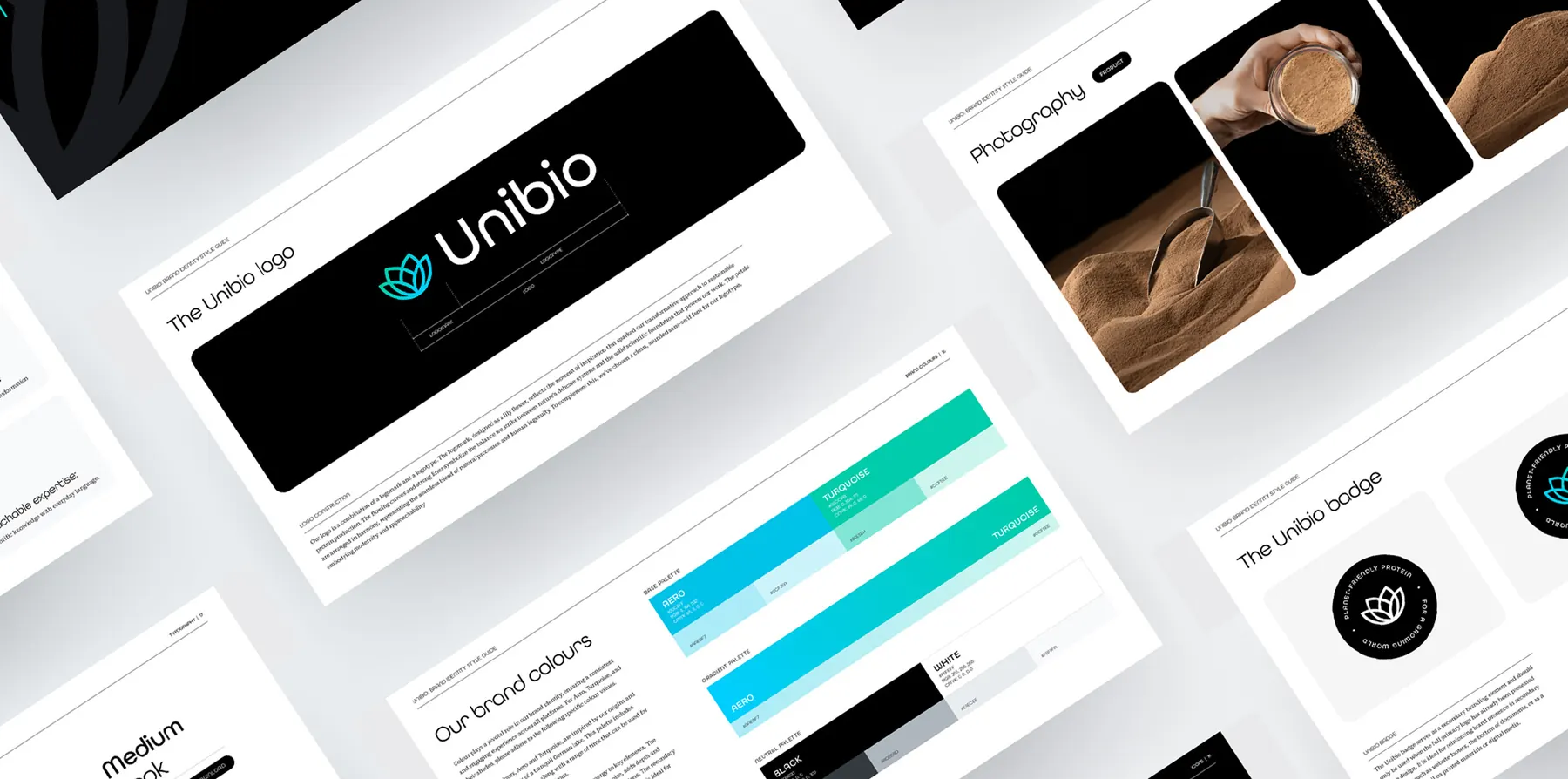
For Unibio, a gas fermentation company, workshops with the CEO, COO, CTO and leadership team set direction, vision, mission and values. The studio repositioned it around its protein product under the principle "Lead with protein. Let the technology prove it." The tone of voice carried into press, web and collateral, alongside a visual identity, a website, and launch and social content for investors, feed producers and partners. Read the Unibio case.
The NewForm Foods work for a cultivated meat company included a press release alongside brand strategy, identity, a pitch deck, 3D rendering and a website. For Fair Carbon, which works with blue carbon projects and coastal communities, the studio provided brand strategy, storytelling, identity, a website, a pitch deck and launch support.
Frequently asked questions
How far ahead of the launch date should we start?
Start while the positioning can still change. A rename or a new standard needs the name, narrative and identity settled before the other materials, so it needs the longest lead time. A product or funding announcement inside an existing brand can move faster.
What if our launch date is fixed and the positioning is still open?
Narrow the announcement to what the team can agree on and support with evidence. The remaining claims can follow in later updates once the position settles.
Can you work alongside our PR agency?
Yes. We build the narrative and core materials, and the PR agency runs media relationships. One narrative document keeps the release, the journalist pitch and the spokesperson briefings consistent.
Do we need a rebrand to launch something new?
A rebrand fits when the launch changes what the organisation is, as with a rename or a move from initiative to standard. A new product, facility or partnership usually needs only a new narrative and a focused set of materials within the existing identity.
Related guides
By Aaron C. Leaman, founder of Brighter Future Studio. Updated 27th September 2026.