 01
 02
 03
 04
 05
Sections
A founder sees that the website no longer looks like the company. Sales calls need too much explaining. The investor deck introduces a different business from the one customers buy. The usual conclusion is that it is time to rebrand.
A positioning project, a rebrand and a website rebuild solve different problems. Doing all three when one would do costs time and money. Doing only the visual work when the problem sits underneath gives the old confusion a more credible surface. So before you commission anything, find the first place the business stops making sense to the people it needs to reach.
Our guide to when a climate startup should invest in branding matches each kind of brand problem to a scope, from a messaging reset to a full brand system. This guide gives you the test that shows which problem you have. It needs three outside readers, two recent conversations and a few hours.
Ask outsiders to read the website, then the deck
Ask three people outside the team to look at your homepage for one minute. Choose people who resemble a buyer or an investor, and keep the team out of the room. Then ask four questions and write down the answers word for word. Leave their mistakes uncorrected, because the mistakes are what you came for.
Four questions after one minute on the homepage
- What does this company sell?
- Who buys it?
- Why would they choose it over what they use today?
- What should they do next?
A day later, give the same people the current investor deck or product sheet and ask the same four questions. Lay the two sets of answers side by side.
What the two readings tell you
- The website and the deck produce two different companiesThe materials disagree. The work starts with one agreed position, carried into both.
- Both readings describe the same company, and nobody can say why a buyer would careThe gap sits in the positioning or in the offer itself.
- Readers understand the offer and cannot name a next stepThe gap sits in the structure of the website and its routes to action.
- Readers understand the offer and describe a smaller or younger company than yoursThe identity understates the business.
Four readings point to four kinds of work, and nobody has mentioned the logo yet.
Read two recent conversations for the first stop
The outside readers show how strangers see the company. Your own recent meetings show where an interested person stopped. Take one recent sales conversation and one investor conversation, with notes or a recording if you have them, and the current homepage. Write five lines for each conversation.
Five lines for each conversation
- What the other person already understood when the meeting began.
- The first question that stopped the conversation.
- Which evidence answered that question, if any did.
- Who could make the next decision.
- What the person was invited to do next.
Then sort each gap by its kind.
Four kinds of gap
- Evidence
The question needed a result the company does not yet hold. This is technical or commercial work, and a design project cannot supply it.
- Strategy
Nobody could say in one sentence what the business is and who it is for. This is positioning work.
- Structure
The answer existed and the person could not find it. This is content and website work.
- Expression
The company came across as smaller, younger or less technical than it is. This is identity work.
The kinds can overlap, and their order matters. Evidence and strategy come first, because the structure and the identity can only carry what those two give them. One studio can deliver positioning, identity and website work in a single project. Ask its proposal to name the gap each part of the work addresses, and repeat the outside readings after the first part ships.
Four questions before you spend
Has the company decided what it sells first? A company that calls every application its lead product has yet to choose a front door. Leadership makes that choice, with evidence of buyer need and readiness, and a brand can then make it visible. Our guide to offer architecture has a three-answer test for it. The free Brand Strategy System records a confidence score from 1 to 10 against each of its seventeen decisions. A position the team rates at five is a weak base for an identity build.
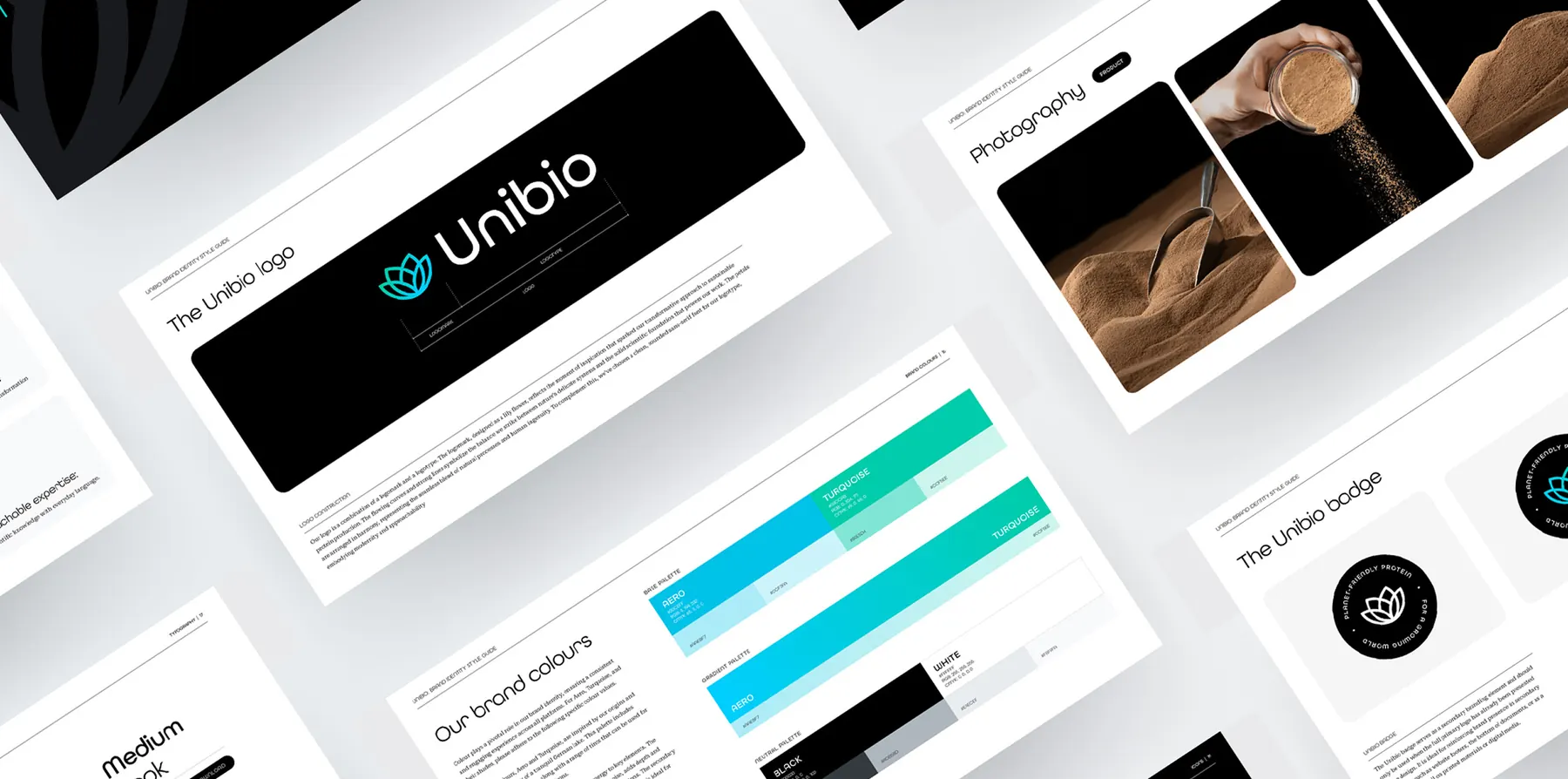
Does the right buyer recognise the value? The technology can impress and the buyer can still be indifferent. Reorder the story around the problem that buyer is paid to solve. Unibio's story led with gas fermentation and reached scientists, while investors needed the scale of the opportunity and feed producers needed to see the product in practice. We put the protein product at the front of every message and made the technology the evidence behind it. Read the Unibio case.
Does the company look like the business it has become? This is where identity work earns its place. Fronterra had four forest carbon and biodiversity projects across more than 1.6 million hectares in Peru, and its public face made the organisation look smaller than the work behind it. We kept its mark and favicon, which already carried recognition, and rebuilt the positioning, identity, website and seed deck around them. Read the Fronterra case. A team that has grown tired of its colours has a preference to discuss, and the outside readings will show whether anyone else shares it.
Does the website stop a willing visitor from acting? A visitor can understand the company and still find no application page, no evidence summary and no route to talk. Gaia AI kept its identity. The change sat in the words and the structure of one landing page, which opens on the forest manager's job and ends on a demo video and a direct line to the team. See the Gaia AI case.
When the name is the problem
A name earns a change when it describes a role or a scope the company has left. Jennifer Cote, CEO and co-founder of Opalia, which cultivates milk from mammary cells, described the company's first name in her interview with us.
“At first, we called ourselves BetterMilk. However, we had to change the name due to branding and trademark issues. Apart from that, we’d just grown beyond the scope of being solely focused on milk, and we began to focus on creating dairy alternatives that could cater to diverse markets.”
A name that still fits the role can carry a new position. DNAir's founders kept a name people found hard to write and say, and a new wordmark solved it in typography. A Rebrand Can Look Good and Still Fail sets out how to judge the depth of a change against the next three years.
When none of these is the answer
Sometimes the right decision is to commission none of them. If a customer cannot buy until the product passes a qualification test, a new website leaves that condition where it was. The same holds for missing evidence, uneconomic pricing and a decision-maker the company has yet to reach. When Better Communication Is the Wrong Answer works through each case.
Write the brief as a behaviour
Once the test has named the gap, write the brief as something a person should be able to do. “A procurement director who visits our website can identify the tested application and request a technical review” gives a studio a job and gives you a way to judge the result. Choose the smallest piece of work that could change what happens next. If the test still points to positioning, a rebrand or a website, the scope will be clearer and the result easier to judge.
When it does, our services cover positioning, branding and website work, and we scope each project from what your readings found.
Questions people ask
How can a founder tell whether the problem is brand positioning, sales enablement or the website?
Run the two readings in this guide. If outside readers cannot say what the company sells or why a buyer would care, the problem is positioning. If readers understand the website and your recent sales meetings stop at a question the sales materials should have answered, the gap sits in sales enablement, meaning the deck, product sheets and evidence summaries the team takes into meetings. If people understand the offer and cannot find proof or a next step on the site, the website is the work.
How do you rebrand a science company without losing credibility?
Keep the scientific claims as they stand and show the status of each one, while making the commercial promise easier to recognise. Bring technical reviewers in before launch, while the homepage is still a draft. A mature visual system should help readers find the evidence and the applications, and leave preliminary results looking preliminary.
When should a growing biotech company change its name?
When the name limits the new market, product architecture or trust the company needs, and the limit survives testing. Before deciding, check customers, contracts, trademarks, web domains, scientific citations and search traffic. A confusing name can sit some way down the list of commercial constraints.
What are the risks of renaming a company before a funding round?
A rename during a raise can confuse active investors, lose recognition, complicate diligence and leave legal and public records out of step. If the position has to change, explain the change before you change the name. If the rename is cosmetic, wait until the round no longer depends on stable references.
Who needs to approve a rebrand in a founder-led company?
The CEO or an accountable sponsor owns the positioning and the resources. Commercial, scientific, regulatory and operational leads check the parts they can judge. Designers propose how a decided strategy is expressed, so product and market choices belong in a meeting before the logo review. Who Should Decide What in a Rebrand? sets out the roles.
Should we rebrand before opening a new industrial facility?
A facility launch can be the occasion for a brand update if the business is entering a new commercial stage. Keep an unfinished identity project apart from a safety-critical or operational milestone. First set out what the facility will demonstrate, what remains unproven and what customers can do afterwards.
Sources and further reading
- Unibio case study, Brighter Future
- Fronterra case study, Brighter Future
- Gaia AI case study, Brighter Future
- DNAir case study, Brighter Future
- Jennifer Cote, Opalia, founder interview, Brighter Future
- When Should a Climate Startup Invest in Branding? A Decision Guide, Brighter Future
- Offer Architecture, Brighter Future
- A Rebrand Can Look Good and Still Fail, Brighter Future
- When Better Communication Is the Wrong Answer, Brighter Future
- The Brand Strategy System, Brighter Future
Brighter Future worked with FronterraRead the case study
Studio servicePositioning, branding and website work
Tell us what needs to move.
Bring the brief if it is clear. If it is unclear, tell us where the work is stuck.
Bring us the problem