 01
01 02
02 03
03 04
04Sections
Sustainability messaging struggles to sell when it is asked to carry the whole commercial case. Buyers first need to see what the product does, whether it meets their specification, what it costs and what risk it removes. Environmental value adds weight once that case exists, and it adds very little before it.
A product can be better for the planet and still be hard to sell. That is usually a positioning problem on the seller's side. Across food technology, materials, carbon, circular products and industrial biotech, we see the same page again and again. The homepage leads with emissions. The deck leads with mission. The product is called circular, regenerative or low-carbon before the buyer knows whether it works in their system.
Buyers purchase inside constraints
A procurement manager, product developer or plant lead rarely chooses between sustainable and unsustainable in the abstract. They choose between suppliers and technical options under constraints they are accountable for.
The new input has to perform. It may need to hit a price range, a shelf life, a strength, a purity level, an uptime target, a delivery schedule or a regulatory standard. It has to survive an internal approval process, and it may need a second source. The person who champions it has to defend the choice to finance, operations and leadership.
A climate benefit can make the option more valuable. The buyer's responsibilities stay the same. So lead with the decision the customer has to make, and bring sustainability into that case where it creates value, reduces risk or meets a real requirement.
Category words carry little information
Sustainable, circular, clean, green and regenerative now work as category markers. They signal intent and say little about commercial difference.
A buyer who reads "sustainable protein" still needs the protein source, the specification, the functionality, the price, the supply model and the application. A packaging manufacturer who reads "circular material" still needs to know whether it runs on existing equipment and meets quality requirements. A textile buyer who reads "low-impact input" still needs volume, consistency, traceability and timing.
Regulation is also closing the room for vague wording. The EU directive on empowering consumers for the green transition restricts generic environmental claims made without recognised proof, and its rules apply from 27 September 2026. Those rules target consumer-facing claims. Business buyers apply a similar test on their own, because their sustainability teams have to defend every claim they repeat.
Lead with the product and let the technology prove it
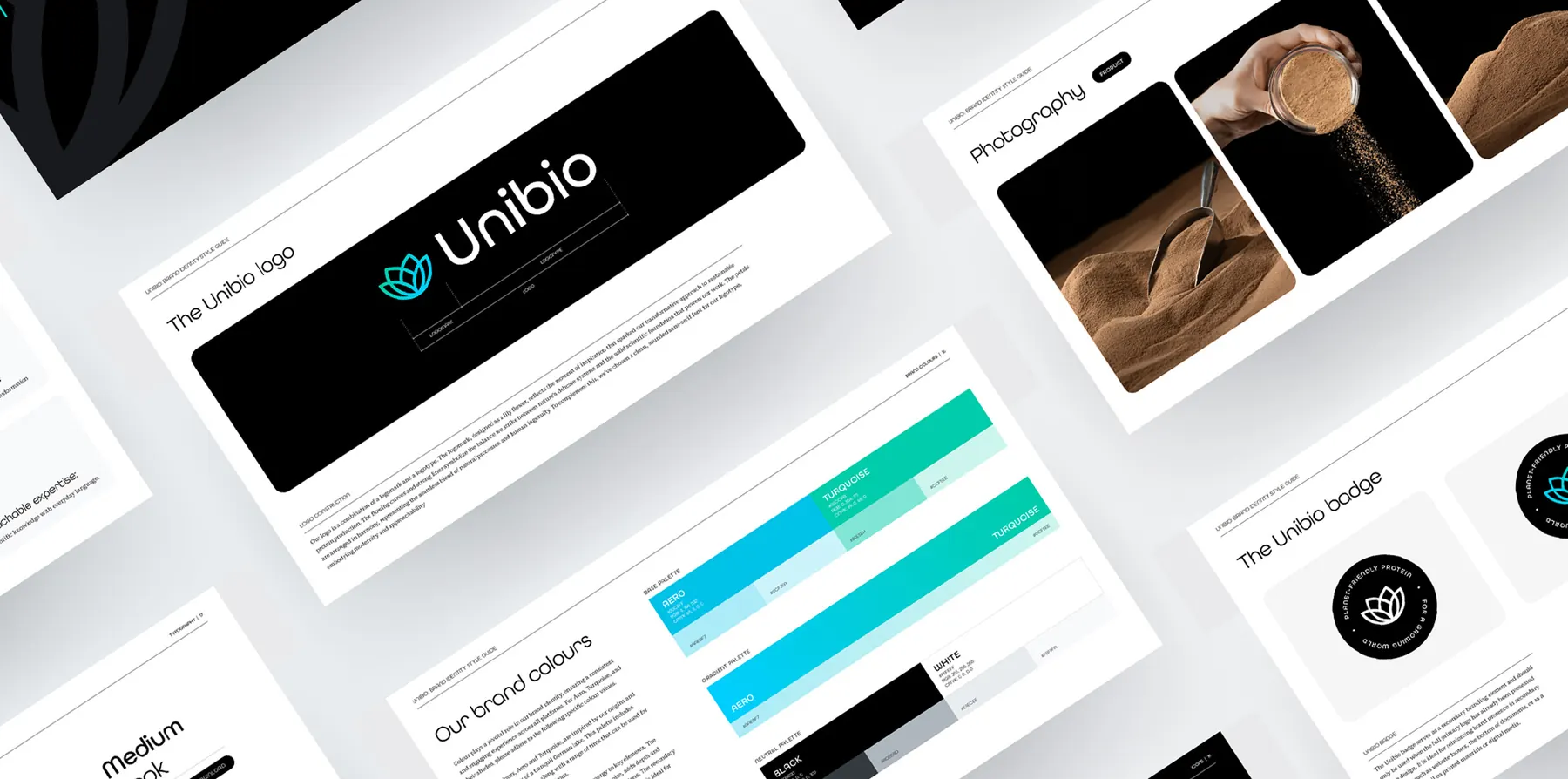
Unibio makes protein for animal feed through gas fermentation. The biological process is sophisticated, and it was easy for the mechanism to dominate the story. A feed buyer first needed the product. What is being bought, what it replaces, which specification matters and how consistent supply will be. Our Unibio work moved the story to a single line. Lead with protein. Let the technology prove it.
Aspyre Foods followed a similar path. It makes duckweed proteins, casein and Rubisco, for food producers. Early decks opened on cheese and a climate problem. The story moved to food producers who need functional proteins they can rely on, which is the job the buyer actually holds.
Founders often lead with the invention because that is where years of effort sit. Buyers lead with the job. The story has to cross that gap, and the technology then becomes evidence for why the product can exist and how it can scale. We cover this sequence in more depth in technology versus product.
Where sustainability adds to the value case
Environmental value is strongest when it joins a case the buyer already recognises. Performance is one route, where the product lasts longer, loses less or works in conditions the alternative cannot. Economics is another, through lower total cost, waste, energy exposure or future compliance cost. Supply matters when the product opens access to a constrained or volatile input. Risk matters when it reduces regulatory, reputational or supply-chain exposure. Customer value matters when the buyer can take the result to its own market. Impact sits alongside all of these as the emissions, waste, land or pollution the product removes.
The Story System gives the Product Story four parts.
- Moment
- Mechanism
- Outcome
- Transformation
The moment is where the product becomes relevant, such as a manufacturer with an input problem or a buyer nearing a compliance threshold. The mechanism is what the product does differently. The outcome is something observable, such as lower cost, higher yield or a new specification. The transformation is why that outcome matters to the user's work. Sustainability can sit across all four, and it reads as more credible because the reader can see what physically changes.
When the environmental attribute decides the purchase
Customers do care about sustainability. Policy, reporting duties, corporate targets and resource limits shape purchasing more each year. BCG's 2023 research found consumers willing to pay for net zero production, and industrial policy is paying closer attention to the same sectors. The European Commission opened a call for feedback on industrial biotechnology and biomanufacturing in May 2026.
The environmental attribute plays one of three roles. In some categories it is a threshold requirement. In others it creates preference once functional requirements are met. In others it changes financing, market access or long-term risk. A company needs to know which one applies to its buyer. Customer research answers that. Find out how the purchase is decided, which requirements are mandatory, which are differentiators and which sustainability claims turn into budget or approval. Stated values alone predict little about willingness to pay.
Keep every claim honest as the story moves
A founding story can hold the centre of a company's messaging after the business has moved. Koralo set out to make a fish alternative from co-fermented microalgae and mycelium. Developing that product surfaced bioactivity in the ingredient, and early evidence pointed to a gut health effect. The opportunity widened to a functional ingredient across food, beverage and animal nutrition, and by July 2025 the deck carried four propositions at once. Our Koralo work kept the seafood story as the route to the discovery and moved the centre of gravity to where the opportunity now sits.
Moving sustainability back in the order creates its own risk. A team can start inventing commercial benefits to fill the space. Claims about cost, yield, shelf life, supply resilience or preference need evidence as much as environmental claims do. A controlled test supports one kind of claim. A pilot supports another. Repeat orders and signed contracts support others. A forecast is useful when it stays labelled as a forecast.
The environmental claim needs the same discipline. If the company has a life cycle assessment, state its boundary and its comparison. If the benefit depends on future renewable energy, scale or sourcing, show those assumptions. If no one has verified the benefit independently, avoid the language of verification. Buyers trust a story more when they can see which claims are solid and which still need work. Our guide to evidence-based storytelling sets out how to grade each one.
A message order to test this week
For many B2B climate products, this order works as a starting draft.
- Job.The problem or decision the buyer already recognises.
- Product.What the buyer is evaluating.
- Proof.Evidence that it performs in the relevant conditions.
- Economics and risk.What changes commercially or operationally.
- Impact.The environmental value the same system creates.
- Mechanism.Enough technical depth to make performance and impact credible.
The order shifts by audience. A sustainability lead may enter through impact. A technical lead may want mechanism earlier. A procurement lead may start with specification and supply. The evidence stays the same in every version.
Then run one test on your homepage and deck. Delete every use of sustainable, green, circular, climate-friendly and planet-positive. A real buyer should still understand why the product deserves evaluation. If they do, the sustainability story has something to attach to, and you can put the environmental value back with precision. If they do not, the product case needs work first.
Brighter Future builds this commercial positioning for climate, food and biotech companies through our positioning work.
Sources and further reading
- EU Empowering Consumers Directive, new rules on green claims apply from 27 September 2026, Latham & Watkins, 2026
- Directive on Empowering Consumers for the Green Transition, FAQ, European Commission
- Consumers Willing to Pay for Net Zero Production, BCG, 2023
- Commission seeks feedback on industrial biotechnology and biomanufacturing, European Commission, 2026
Tell us what needs to move.
Bring the brief if it is clear. If it is unclear, tell us where the work is stuck.
Bring us the problem