 01
01

 02
02 03
03 04
04Sections
Brighter Future has published 94 founder and origin-story interviews across climate, food, nature, energy, circular materials and impact. Read together, they show how conviction forms, how founders explain new categories and where a company that needs customers, capital and trust outgrows a personal story.
What the archive is
The interviews span different years, markets and company stages. They are first-party source material, with founders explaining in their own words where they came from, what they were trying to change and what they learned while building. They form an uncontrolled sample, so our claims about climate founders are qualitative.
For narrative work, that is their value. We can compare what founders said before anyone turned it into a website headline, an investor slide or a polished company history. The answers stay as they were published, with our analysis around them, so you can inspect the evidence yourself.
Pattern 1: origins begin with a change in attention
An origin earns its place by marking the point where something familiar became impossible to see the old way. “I have always cared about sustainability” describes a constant.
Aarav Chavda describes INVERSA as combining material science with a personal relationship to diving and biodiversity, then turns invasive species into the starting point for a new materials model. Florian Tiller describes Ucaneo through the problem of legacy CO2 and the difficulty of extracting a very dilute gas from ambient air. Steffen Gerlach’s Eeden story starts from a textile-recycling contradiction. Mixed cotton and polyester are everywhere, yet many recycling approaches were recovering less than a complete material solution.
In each, something in the background becomes the problem the founder has to solve.
Pattern 2: founder, company and leader may have separate origins
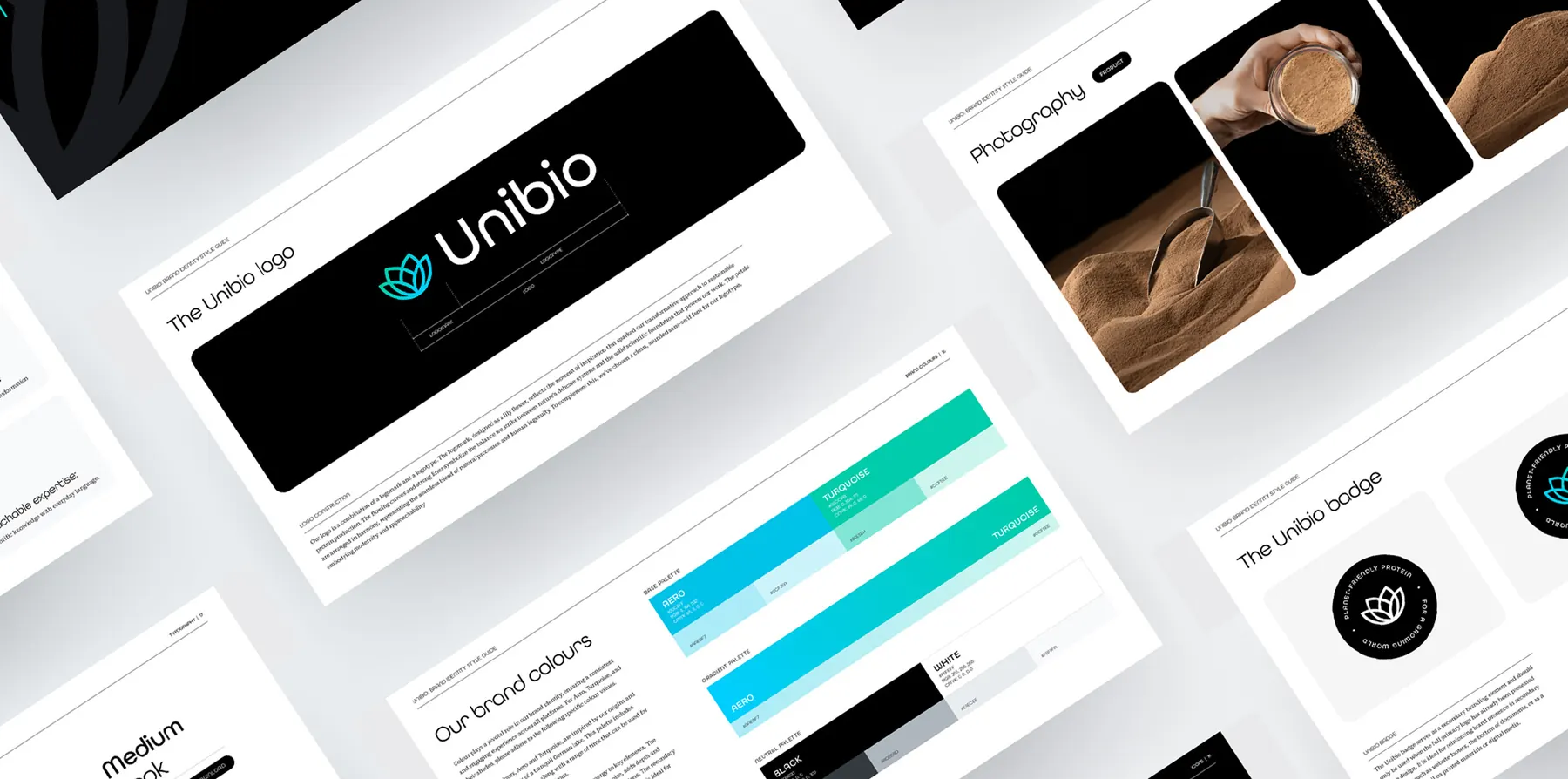
A common mistake is to force every senior leader into a founder narrative. The Unibio interview shows why that fails. David Henstrom joined after a long operating career, when the company’s gas-fermentation technology already existed, and became responsible for helping take it towards a different scale.
That gives Unibio two legitimate stories. The company origin explains where the technology came from. The leadership story explains why this person is credible for the next phase. Combining them would make both less accurate.
The same applies to companies that have changed CEO, merged, spun out of a university, acquired technology or moved far beyond their founding thesis. Tell the history in the order it happened, with the present leader entering where they entered.
Pattern 3: purpose and product do different jobs
Many climate founders do the work for moral or ecological reasons. Those reasons matter. The mechanism needs its own explanation.
MeliBio’s story contains a broad concern about pollinators, biodiversity and the food system. The company still has to explain what bee-free honey is, how it is made, whether it performs for customers and why the market should switch. ERS exists because ecosystem restoration needs better support and trust, and a project developer or carbon buyer still needs to understand the standard, the monitoring model, the verification process and the economics.
Pattern 4: unfamiliar categories need a bridge
Climate and science companies often ask an audience to learn a new mechanism before it can evaluate the proposition. Several founders build a bridge first.
Ucaneo describes direct air capture with a biological analogy, saying the technology mimics the way humans breathe. Unibio talks about “brewing protein”, connecting gas fermentation to a process people already understand. INVERSA starts from a familiar product, leather, then changes the source material and the ecological consequence. Each bridge gives the audience somewhere to stand before the technical explanation begins.
The analogy opens the conversation. Once the mechanism is understood, the questions move to performance, cost, evidence, integration, risk and scale.
Pattern 5: customer discovery belongs in the story
Founder narratives can turn inward. Eeden’s interview is a corrective. Gerlach reflects that one early mistake was talking to potential customers too late. The team’s technical hypothesis was moving in the right direction, and he still names early customer exposure as something he would change.
For branding, the Customer Story comes from the customer. It has to reflect what the other party is trying to achieve, what makes switching hard, what evidence they require and which trade-offs they will accept. A company can have a compelling Origin Story and still have weak positioning if it knows too little about the decision on the other side of the table.
Pattern 6: first-of-a-kind companies have a precedent problem
Several interviews describe markets where the company has to ask someone to be early as well as win their preference.
Jennifer Cote describes Opalia operating in a young field with limited precedent while raising capital and doing R&D. Aaron Schaller talks about the difficulty of getting the first cheques into MeliBio because investors often prefer somebody else to go first. The same structural issue appears across industrial climate technology, carbon markets and new materials. The first investor, buyer, insurer or commercial partner often absorbs uncertainty that later participants avoid.
Communication has to be precise here. “Nobody understands us” may be partly true, and the blocker may also be rational first-mover risk. A better deck makes the risk and the de-risking plan legible. The risk itself stays until the plan retires it.
Pattern 7: impact becomes credible when it becomes observable
“We want to protect biodiversity” is purpose. “This changed the material flow, measurement, habitat, customer decision or deployment in this specific way” is impact.
Early-stage companies may have incomplete impact evidence. That is fine. The honest version separates what has happened, what has been validated, what is forecast and what remains a thesis. In climate markets a large future claim can easily outrun the evidence underneath it.
Six jobs need six stories
The most common problem we see is one story asked to do the work of six. A founder origin stands in for customer messaging. Purpose replaces a proposition. Vision replaces evidence. Intention stands in for observed impact.
The six stories we use
- Origin
Why this began.
- Purpose
Why the organisation exists.
- Vision
The future it is trying to make true.
- Customer
Who it serves and what they are up against.
- Product
What has been built and how it works.
- Impact
What changes because the organisation exists.
Using your own origin
From long draft to working origin
- Long version
Write the long version first. Leave the homepage sentence until later.
- Attention
Find the moment your attention changed.
- Question
Identify the question that followed.
- Choice
Show the choice that turned the question into work.
- Stop
End before the origin tries to explain the whole company.
- Other stories
Build purpose, vision, customer, product and impact separately.
- Audience
Adapt the six stories to the audience and the decision in front of you.
Keep the detours
A founder story earns trust by showing the path as it was. Real businesses contain detours, wrong assumptions, changing markets and decisions that only make sense in retrospect. Keep that texture. Explain the conviction behind the company clearly enough for the audience to judge it on its merits. Heroics are optional.
Draws on Brighter Future’s founder interview archive.
Tell us what needs to move.
Bring the brief if it is clear. If it is unclear, tell us where the work is stuck.
Bring us the problem