 01
01 02
02 03
03 04
04Sections
A technology explains how something becomes possible. A product explains what someone can buy, use or integrate. Science-led companies in climate, energy, materials and biotech often blur the two, most often when the underlying mechanism took years to build. The product has to earn relevance before the technology earns fascination. This piece covers the general pattern across sectors. We have written separate versions for food tech and industrial biotech.
Technology and product answer different questions
A technology story covers the mechanism, the scientific or engineering step underneath it, why the approach differs from the incumbent and what has been demonstrated so far. A product story covers what the customer receives, where it enters their operation, which specification matters, what it replaces or reduces, what the customer has to change to use it and what evidence supports the promised result.
Both stories are true and both are needed. Trouble starts when a company assumes the first answers the second. A buyer who hears a clear account of a catalytic pathway can still leave the meeting unable to say what they would order, in what volume, against what specification.
Public funders already draw this line. The US Department of Energy pairs the familiar technology readiness scale with Adoption Readiness Levels, which assess the commercial conditions around a technology, and it publishes a Commercial Adoption Readiness Assessment Tool for the purpose. NASA's Technology Readiness Levels describe how mature a technology is. The adoption scale asks whether a market can take it up. A company can score well on the first and still have a product story the buyer cannot follow.
Founders lead with what was hardest to build
If the company spent years on a fermentation process, a sensing system or a new material, that work feels like the centre of the story. The buyer did not live through those years. They arrive with an operational problem.
That problem is usually concrete. They need protein at a set specification and price, a material that passes qualification, a sensor that returns useful readings at the right frequency, or a process that fits the plant without destabilising it. The technical achievement starts to matter at the moment it helps them believe the product can meet those requirements. Before that moment it reads as background.
There is a quieter cost too. A mechanism-first story asks the buyer to do the translation from process to value themselves. Most will do it badly or skip it, and a procurement lead forwarding the deck internally will pass on the confusion with it.
Unibio put the protein first and let the technology prove it
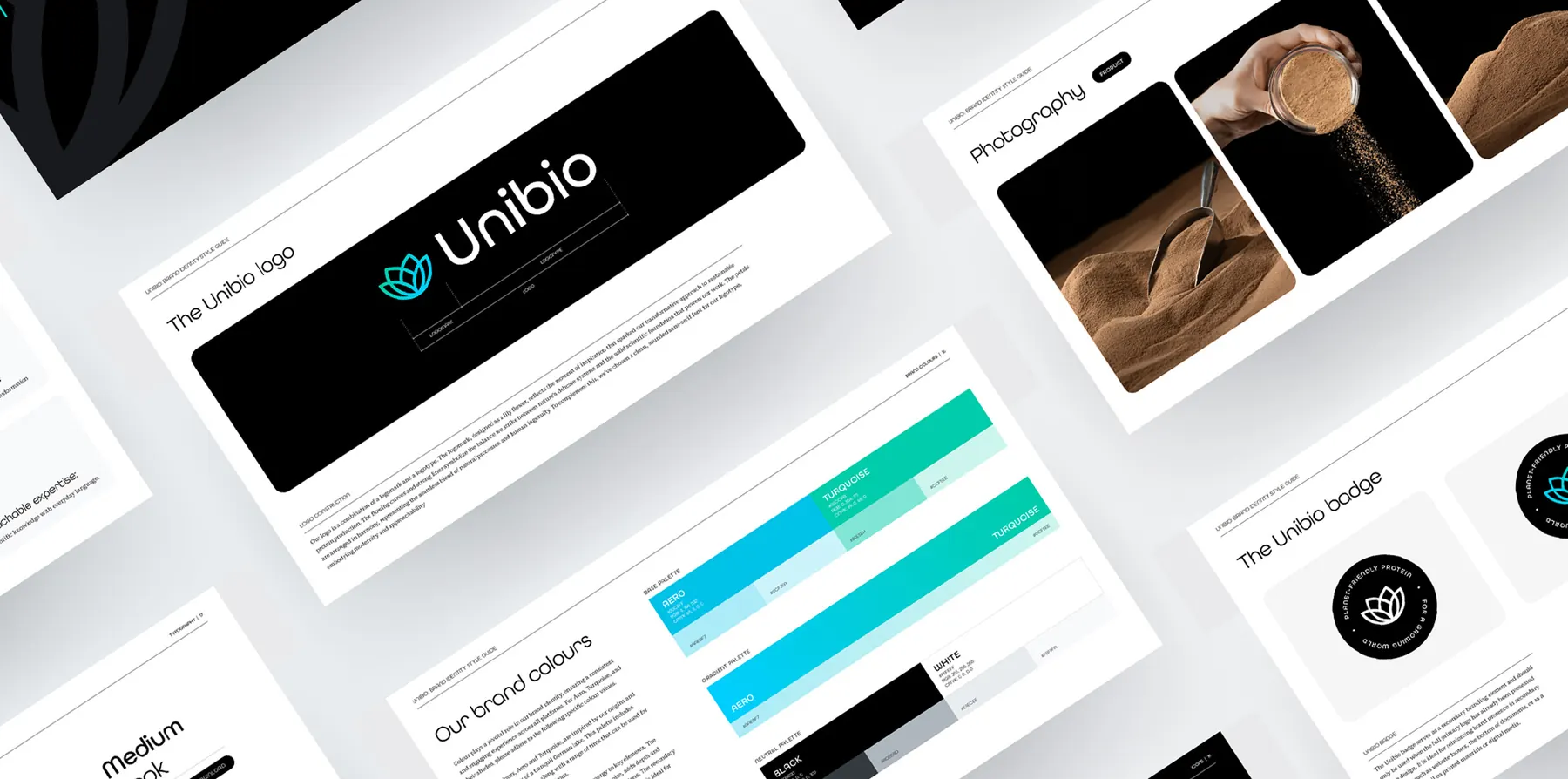
Unibio uses gas fermentation to make protein for animal feed. The process is technically interesting and a real part of the company's advantage. A feed producer still needs to know the product first, meaning what protein is on offer, what it is for, the specifications that matter and the evidence behind them.
In our work with Unibio the company was repositioned around the protein product, with the technology held as evidence. The line that came out of the leadership workshops was "Lead with protein. Let the technology prove it." The identity and the website were then built for three audiences, investors, feed producers and partners, each meeting the product before the process. A product-led story does the translation the buyer would otherwise have to do, in this order.
- Product
- Application
- Value
- Evidence
- Mechanism
The product says what is supplied. The application says where it fits. The value says what changes for the customer. The evidence says why that change is credible. The mechanism says why the company can deliver it differently or at scale. The technology stayed in the story and moved to the place where it does the most work, answering the buyer's next doubt about how the product can be made reliably.
The mechanism earns confidence after the offer earns relevance
In industrial biotech and climate technology the mechanism is often part of the moat. Cutting it out would weaken the case. The fix is sequence, and a technical product story holds up best when it moves through four layers.
- Moment
- Product
- Outcome
- Proof and mechanism
The moment is what is happening in the customer's world when the product becomes relevant. A feed producer is reformulating. A manufacturer needs a lower-carbon input. A land manager needs evidence before a planting decision. A plant is paying to dispose of a stream that could become an input. The product is what the customer receives, named as plainly as the market allows, whether that is a material, a component, a data product, a unit or an output. The outcome is what changes if it works, in yield, waste, cost, time, reliability, compliance or supply resilience. The proof and mechanism come last, and here the technical story earns its place.
A procurement lead, a technical evaluator, an investor and a scientist will want different depths at that last layer. They should all be looking at the same facts in the same order. We cover the craft of that depth in how to explain a technical product without oversimplifying it.
Platform companies need a first product
Some companies have a real platform with several possible products. The market still needs to meet one of them first. The platform tells an investor why the opportunity could grow large. A specific product tells a customer why there is something worth buying this year.
When every conversation opens with the platform, the company sounds broad before it sounds useful. A sequence that tends to work runs like this.
- Product wedge
- Proof
- Customer value
- Underlying platform
- Expansion path
The immediate decision stays concrete and the long-term ambition stays intact, because the platform arrives as an explanation of what comes next.
Where the technology should lead
There are real exceptions. A licensing counterparty, a technical partner or a specialist investor may be in the room to evaluate the mechanism itself. In a new category the technology can be the reason the audience turned up at all.
Even then, tie the mechanism to a decision. Say what the technical difference makes possible that was too expensive, too slow or too unreliable before, and which limit of the current approach it removes. Technical depth earns its place when it changes what the reader can conclude. A diagram that only shows the process is decoration. A diagram that shows why yield holds at scale is evidence.
How to test your own story
Give the first page of your website, or the first three slides of your deck, to someone outside the founding team. Ask them to write down five things without help.
- What they could buy or use.
- Who it is for.
- What problem or job it addresses.
- What result is being claimed.
- Why they should believe it.
If they can explain the technology and stumble on these, the product is still hidden behind the mechanism. Rewrite the opening so a buyer could answer all five in under a minute, then check that the technical section answers the doubts those answers raise. Science-led companies can keep the technology as impressive as it is and make the commercial object around it easier to see. The Story System gives the Product story its own place for this work.
If your story leads with the process and your buyers keep asking what they would actually order, our positioning work starts there.
Sources and further reading
- Commercial Adoption Readiness Assessment Tool (CARAT), U.S. Department of Energy, 2023
- Adoption Readiness Assessment, U.S. Department of Energy, 2025
- Commercialization and Pathways to Commercial Liftoff, U.S. Department of Energy, accessed 2026
- Build the Strategy Before the Brand, Brighter Future, 2026
Tell us what needs to move.
Bring the brief if it is clear. If it is unclear, tell us where the work is stuck.
Bring us the problem