 01
01 02
02 03
03 04
04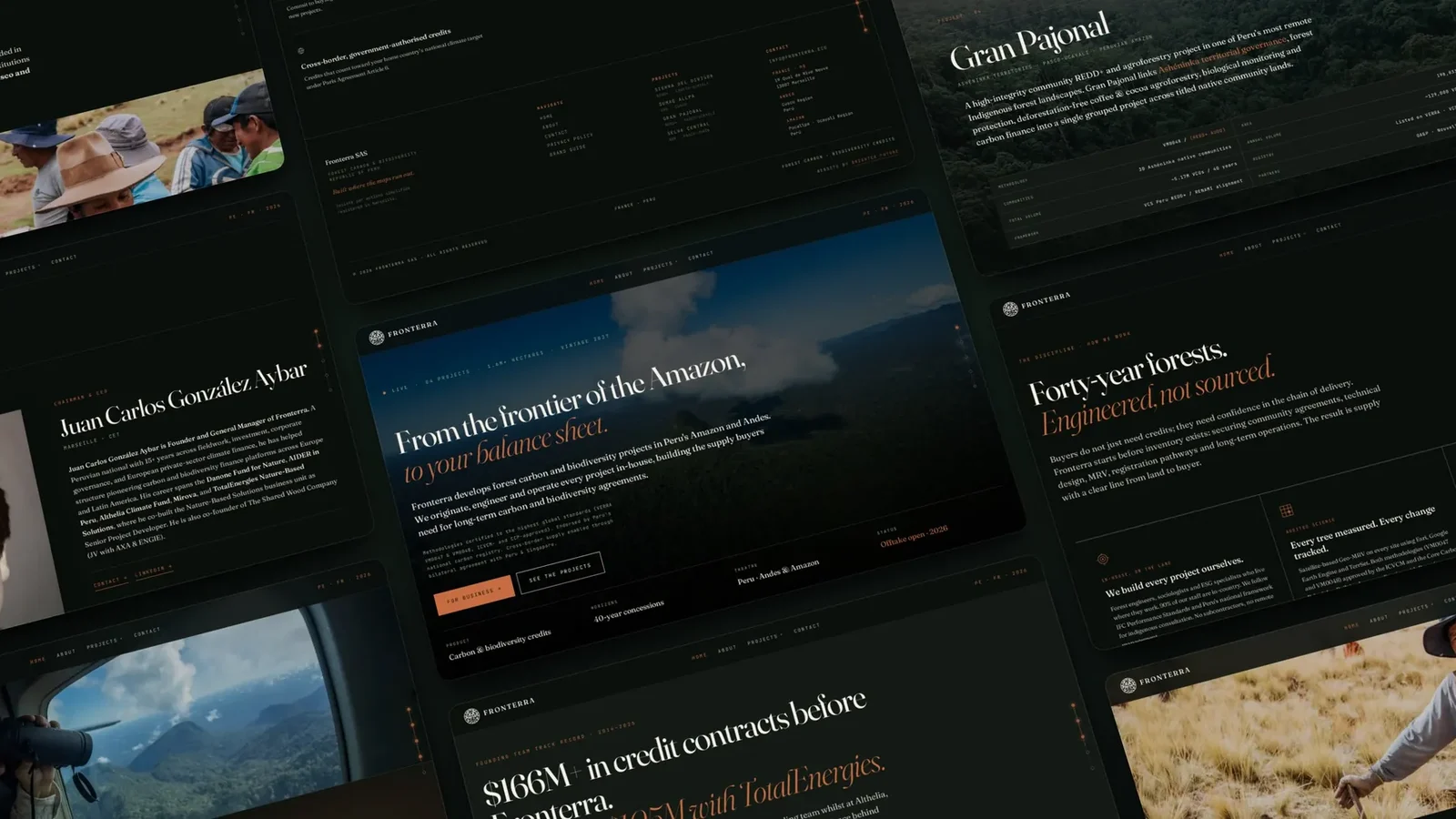
Sections
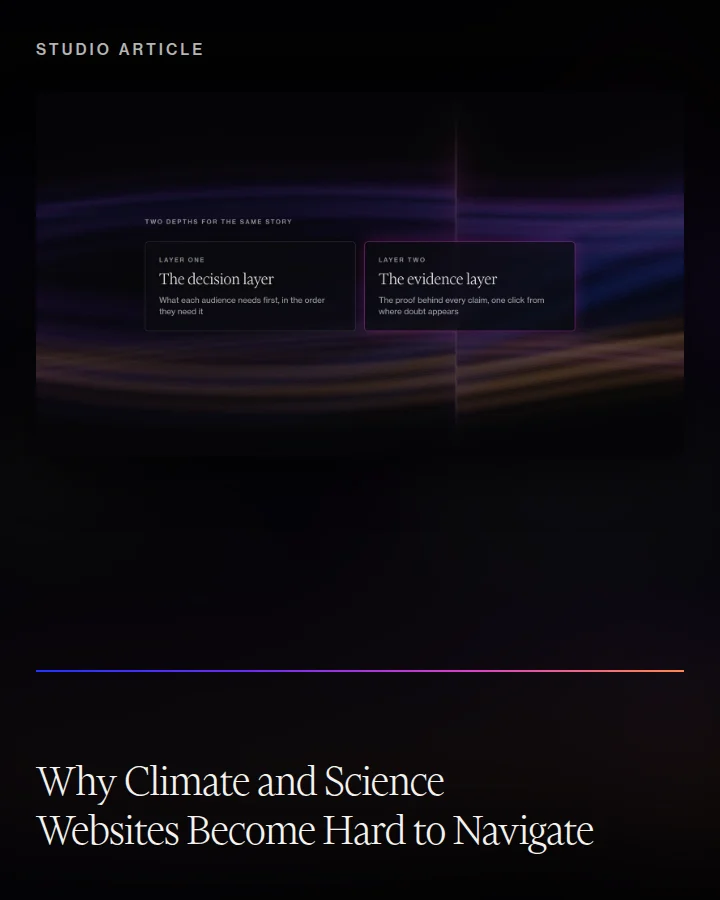
That evidence sits in technical reports, project documents, leadership experience, validation results, contracts, maps, methodology pages and investor material. The distance between the headline and the proof matters. For complex climate and science work, brand strategy includes deciding where the proof appears.
More evidence is not always the first answer
The Belief Gap framework separates four states in a consequential decision. They are Evidence, Clarity, Conviction and Commitment. The sequence matters because a stalled decision can look like one problem while actually sitting somewhere else.
Sometimes the evidence is insufficient. Sometimes the evidence exists but the audience cannot understand what is being claimed. Sometimes they understand it and still do not believe the proposition matters to them. Sometimes they believe it and still cannot act because the economics, authority, timing or exposure make the decision irrational.
Evidence architecture helps when the proof already exists and is not doing enough work. It cannot repair a rational no.
Start with the doubt
An evidence exercise should begin with one audience and one decision. For an investor, the doubts may be whether the team can execute, what is proven technically, what has been validated commercially, what risk remains and what the next round actually unlocks.
For a corporate buyer, the questions may be whether the product works in their conditions, how mature the supply is, what integration requires and what evidence procurement or technical colleagues will need. For a project partner, it may be stage, methodology, local involvement, delivery status and what remains unresolved.
Once the doubt is explicit, the proof can be placed beside it. That is more useful than starting with a folder containing everything the organisation can prove.
Fronterra had the proof. The public experience hid too much of it.
This was central to our work with Fronterra. The company already had substantial project evidence and a team with deep carbon-market experience, but the public story made too much of that credibility difficult to inspect. Broad nature language arrived before the operating proof.
We changed the order. Projects moved closer to the centre of the story. Each project had to answer practical questions quickly, covering where it is, what is being developed, what stage it has reached, what methodology sits behind it, who is involved locally and what scale is being built. The founding team's track record also moved forward.
The brand reorganised the evidence of authority that was already there.
Status matters as much as visibility
One of the easiest ways to weaken trust is to make different evidence states look the same. Climate and science companies routinely work with achieved results, validated results, contracts, indications, work in development, forecasts and targets. Each of those carries a different status.
A signed LOI is not revenue. A target capacity is not installed capacity. A project in validation is not a validated project. A forecast is not an achieved result. The discipline can feel conservative during communications work. It becomes valuable as soon as the material reaches diligence, procurement or technical review.
For technical pages, we often find it useful to separate four things.
Claim
What are you saying is true?
Evidence
What supports it?
Boundary
Where does that evidence stop?
Implication
Why does it matter for this audience's decision?
That structure helps scientific accuracy and commercial clarity stop competing with one another.
One evidence spine should survive the website, deck and diligence
A website, teaser, investor deck and proposal should describe one reality. The depth will change, and the facts should stay the same. For Fronterra, the seed deck was rebuilt from the same strategic foundation as the website. The company definition, project facts, terminology, evidence status and operating logic remained consistent as the material became more detailed.
That matters because real decisions move across documents. An investor may see the website, then a teaser, then a deck, then a data room. A corporate buyer may see a product page, technical PDF and proposal. If the evidence changes between those surfaces, the audience starts checking the company when it should be evaluating the opportunity.
Design can help here. Status labels can distinguish achieved from forecast, tables can make projects comparable and maps can establish geography. Captions can carry methodology and source information, and diagrams can show a mechanism without burying it in prose. The aim is to make the meaning of the evidence easier to inspect.
Clear evidence helps people and machines for the same reason
There is also a search and AI-search benefit to this discipline. Retrieval systems have a better chance of understanding a claim when the page states what is being claimed, who it refers to, the status of the result, the source or case it comes from and the limitation around it.
Again, the answer is explicit structure. Keep important claims in text, and use descriptive headings and captions. Link a claim to the relevant case or primary source. Avoid keyword stuffing, and avoid hiding the entire meaning inside a graphic. Human credibility and machine legibility reinforce each other here.
A climate brand has to make the promise memorable and the case inspectable.
Tell us what needs to move.
Bring the brief if it is clear. If it is unclear, tell us where the work is stuck.
Bring us the problem