 01
01 02
02 03
03 04
04Sections
A biotech pitch deck needs a team that can read the science, hold every claim to the evidence and still make the investment case easy to follow. Design matters, and it comes last. The harder skills are understanding the mechanism well enough to simplify it without distortion, presenting data honestly, placing the regulatory pathway and scale-up plan where investors look for them, and knowing which words a scientific reviewer will challenge.
Founders often choose a deck partner on the strength of a portfolio. In biotech and life sciences the portfolio shows the least important part of the work. The questions below show the rest.
Claim discipline
Many biotech investors involve scientific advisers or specialist diligence. Claims that appear simple in a pitch can therefore receive close technical scrutiny later in the process. A slide that says a process is proven when it has run at bench scale will cost the founder credibility in the first partner meeting. Words like validated, clinical, commercial and scalable each carry a specific meaning to that audience.
The team building the deck should ask for the source behind each claim and be comfortable pushing back when a line runs ahead of the data. Our piece on turning technical evidence into an impact story without overclaiming covers how to keep ambition and accuracy in the same sentence.
Data that survives scrutiny
Charts in a biotech deck get read closely. Axes, units, sample sizes and time frames need to be right and visible. A chart redrawn for style can lose the detail that made it credible. Error bars, controls and the conditions of a trial belong on the slide or in a clear note.
The builder should work from the underlying data and check the redraw against the original figure. When a result is early, the slide should say so, and the story should explain what the next study will show.
The regulatory pathway
Investors in food tech, industrial biotech and life sciences price regulatory time as heavily as technical risk. The deck needs a clear view of which approvals the product requires, in which markets, in what order and how long each is likely to take. Novel food approval, feed approval and medical routes each carry their own timelines and evidence.
A deck that leaves regulation to the appendix invites the question in the meeting, where it is harder to answer well.
Scale-up and unit economics
Biotech companies raise most of their capital to move from lab to plant. Investors want to see the path from current output to commercial volume, the cost curve along the way and the milestones that prove each step. Our guide to biomanufacturing scale-up sets out how to tell that story as a sequence of retired risks.
Leading with what the science makes possible
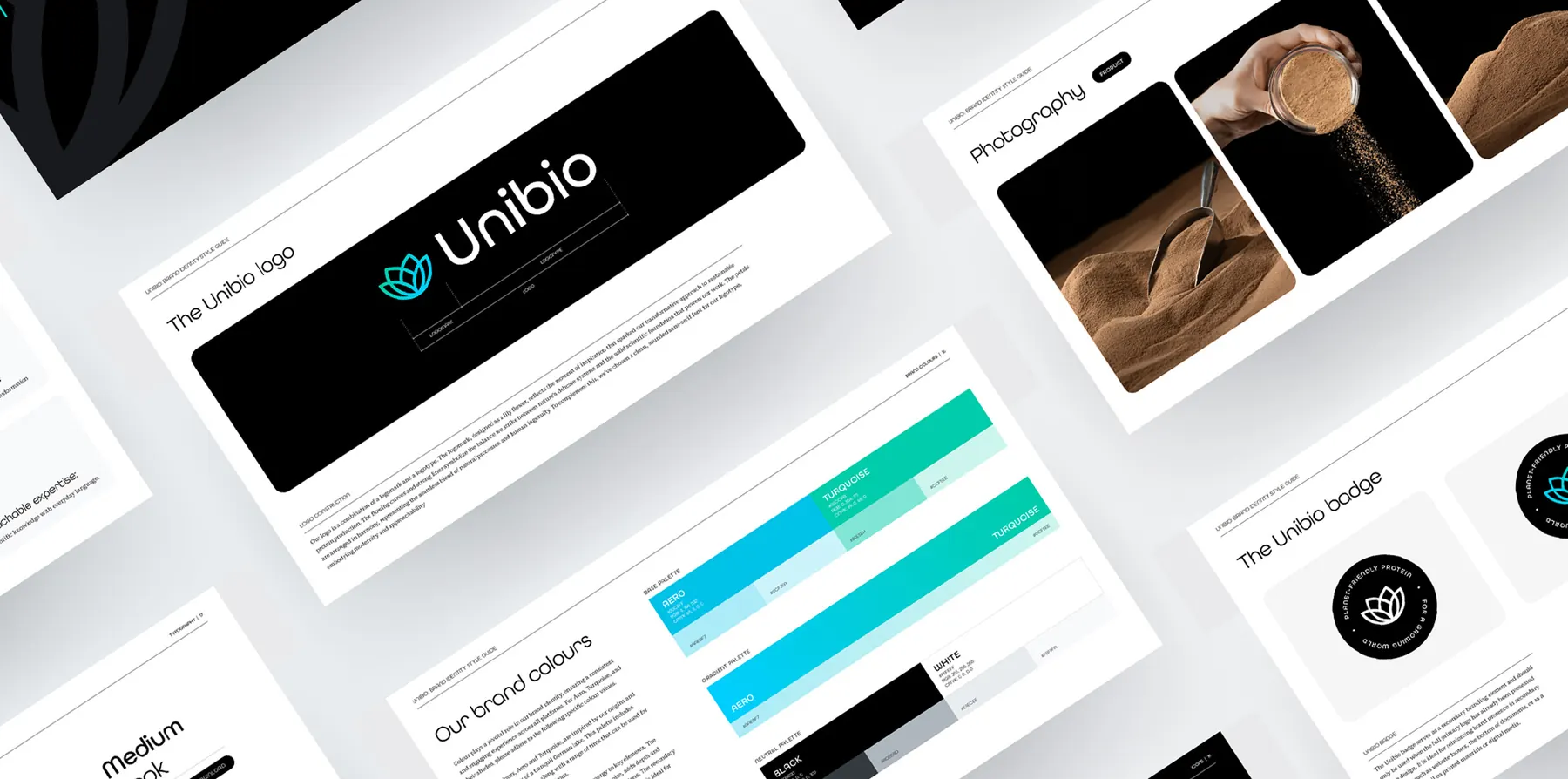
Biotech decks often open on the process. Unibio's story led with gas fermentation and reached scientists more easily than investors and feed producers. We repositioned Unibio around the protein and used the technology as its proof. Aspyre Foods grows duckweed to produce functional proteins, and its early decks carried the whole case on casein. The work presented a protein platform for food producers, with casein as one proof of what it could do.
Both companies kept every piece of science. The order changed so investors met the product first and the mechanism when they asked how it works.
Questions to ask before choosing a partner
Ask what biotech, food tech or life sciences companies the team has worked with, and what the science was. Our own work spans gas fermentation at Unibio, duckweed proteins at Aspyre, cultivated meat at Newform Foods and airborne eDNA at DNAir.
Ask who will speak to your CSO or head of R&D, and how many conversations they expect to need.
Ask how they check claims and data before anything goes to design.
Ask how the deck will carry into the website, data room and partner materials, so an investor who checks one against another finds the same company.
Ask what they will do if they find a gap in the evidence. The useful answer names it early, while there is still time to close it before the raise.
Brighter Future builds pitch decks and investor stories for biotech, food tech and science-led companies through its biotech branding and pitch deck design work.
Tell us what needs to move.
Bring the brief if it is clear. If it is unclear, tell us where the work is stuck.
Bring us the problem