 01
 02
 03
 04
 05
Sections
A biotech company may have spent ten years building a process that can make several valuable products. Its scientists know the mechanism. Its investors want the size of the platform. A prospective customer wants to know whether one ingredient runs in a real formulation at an acceptable cost.
Each description is accurate, and one of them opens the homepage. The choice reaches past the wording. It sets which counterparty the company courts first, which evidence it collects next and what the next raise has to buy.
For most companies that sell an output, the answer is the product, with the technology as its evidence. Technology vs Product sets out that order, and our biotech work shows it with clients. This guide covers the decision underneath, including the cases where a licence, a development partnership or manufacturing capacity is the first thing the company sells.
Read the front door from the first contract
Start with the first agreement the company needs a counterparty to sign in the next twelve to eighteen months. Name the document and the person who signs it. The front door follows from what that document buys.
Read the front door from the first contract
- The first contract is a purchase order, a supply agreement or a qualification trial for an outputLead with the product. The process becomes the evidence that the product can be made reliably.
- The first contract is a licence, a joint development agreement or a research collaborationLead with the platform, and name the first field of use the partner would develop.
- The first contract buys manufacturing capacity, process access or the rights to a processLead with the process, stated as the change in the counterparty's cost, speed or output.
- Nobody on the team can name the first contractDecide the contract first. A new homepage would only rearrange the open question.
One technology can carry two front doors when two counterparties sign different contracts. Genomatica developed a fermentation process it called GENO BDO to make butanediol, an intermediate chemical. Novamont licensed that process for its Mater-Biotech plant in Italy, and in 2016 it opened what it described as the world's first commercial plant for bio-production of a major intermediate chemical. For Novamont, the purchase was the process. For a buyer of butanediol, the purchase is the product, a named chemical with an existing market.
Capacity works the same way. Liberation Labs, a US company, broke ground on its first purpose-built precision fermentation biomanufacturing facility in Richmond, Indiana, and announced a manufacturing partnership with Vivici, a precision fermentation dairy protein company. The facility offers capacity, so its process and plant lead. Vivici sells dairy protein, so its product leads, and the partnership gives it a route to volume without owning a plant. Our industrial biotechnology guide covers the choice between contract and owned capacity.
Three front doors and what each still has to show
Each front door has its own first reader, its own second layer and its own common slip.
| Front door | The counterparty checks first | What moves to the second layer | Watch for |
|---|---|---|---|
| Product | Application, specification, cost in use, supply status and the route to a trial | The organism, the process and the platform's other outputs | A product named before the company can supply the volume a buyer would test |
| Platform | The field of use, the intellectual property status, what the partner would licence or co-develop and which uses are demonstrated | Detailed process economics and the full list of possible markets | A list of markets standing in for a first field of use and a route from capability to revenue |
| Process | The change in the counterparty's cost per batch, time to volume or output quality, and the terms of access | The science behind the process and the company's own product ambitions | A description of the equipment where the counterparty needs its own economics |
A mature company can keep all three explanations on its website at different depths. The homepage still has one primary orientation, and the other two sit one click deeper.
Write three opening sentences
Write the company's opening sentence three ways, once for each front door. Then hold each sentence against the first contract.
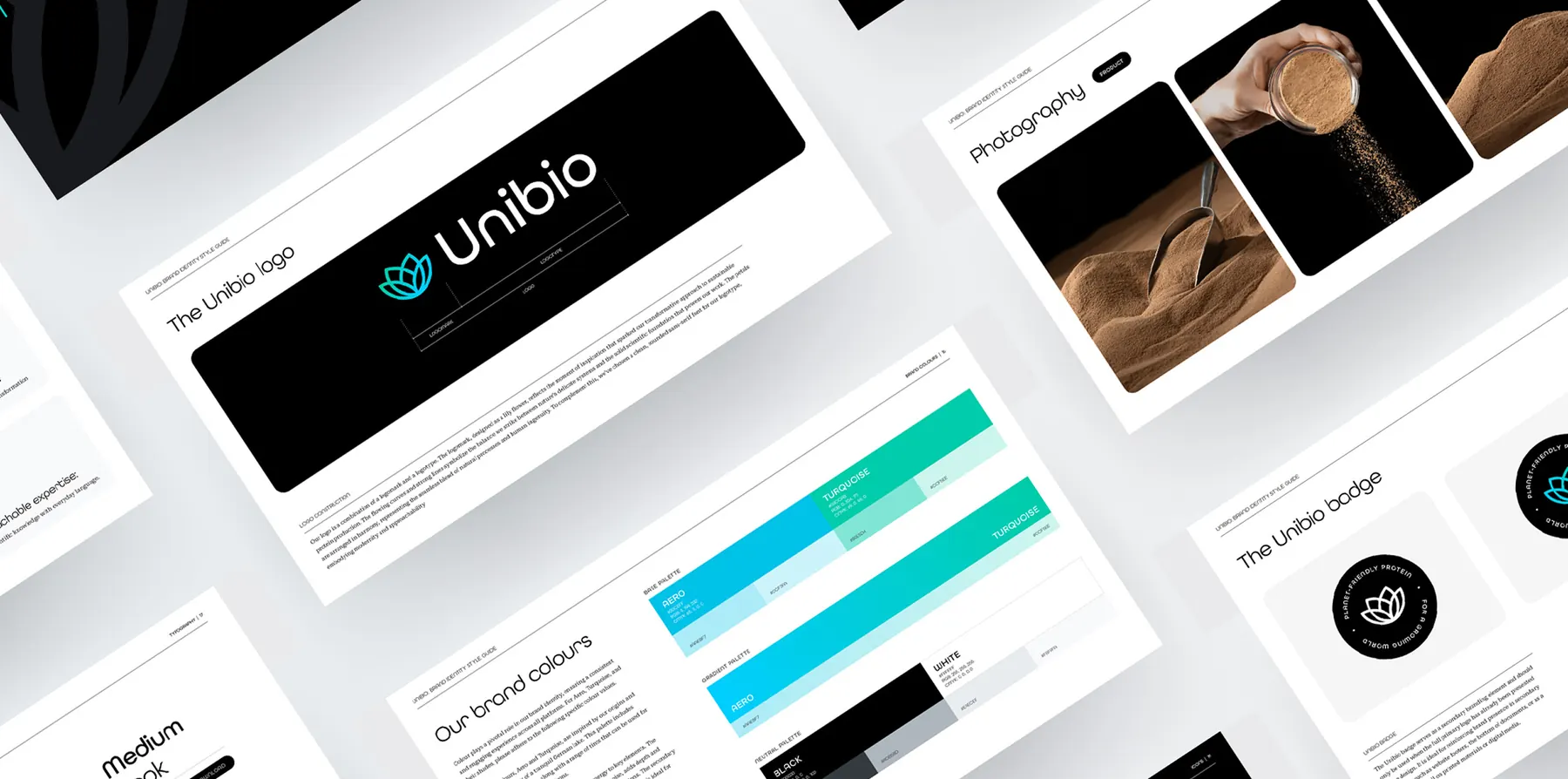
A product sentence names the output, the buyer and the use. Unibio's story moved to that kind of sentence when we repositioned it around its protein for feed producers, under the line "Lead with protein. Let the technology prove it." A platform sentence names the capability and the first field of use a partner would develop. A process sentence names the counterparty and the change in its operation.
The sentence that matches the first contract opens the homepage and the deck. The other two become the first lines of the platform page and the technology page. If each person on the team argues for a different sentence, the disagreement is about the first contract. When Science, Sales and Leadership Describe Different Companies shows how to sort it.
Give investors the platform through the first contract
Investors read for the size of the business, so the platform matters more to them than to a first buyer. A non-scientist investor still needs a concrete starting point. Begin with the market and the first application, then explain the technology as the evidence and the defence. Show which performance claims the company has achieved, which depend on scale and what the capital will accomplish. Technology vs Product gives the investor order in full.
Two checks keep a platform claim credible.
Two checks for a platform claim
- What carries over
Name what transfers from the first product to the next, such as the organism, the process, the feedstock, the manufacturing system, the data, the regulatory work or access to the same customers. The more that transfers, the stronger the platform case.
- Status of each application
Give every other application a status of demonstrated, in development or proposed. Each new output may still need its own regulatory route, downstream processing or plant.
Koralo shows the cost of opening on everything at once. Its earlier deck carried four propositions, one of them the co-fermentation platform itself, and investors could not tell which one they were being asked to back. The rebuilt story leads with the functional ingredient, where the early evidence points, and the patented co-fermentation sits lower as the defence. The Koralo case records the order.
Keep the choice on one page
Record the decision so the next deck, website brief and sales conversation start from it. The record also lets the team reopen the choice for a stated reason.
First contract: [the document the counterparty signs, and who signs it]
Front door: [product, platform or process], because [what the contract buys]
Opening sentence: [the line that opens the homepage and the deck]
What the counterparty checks first: [specification, field of use or cost per unit], with the status of each piece of evidence
Second layer: [what moves one click deeper, and the page that carries it]
Other applications: [each one, with its status of demonstrated, in development or proposed]
Review trigger: [the contract, result or raise that would reopen the choice]
The record then shapes the site. A product front door needs application pages with specifications, regulatory status and a route to samples or qualification. A platform front door needs a field-of-use page and a partnership route that separates licensing from co-development. A process front door needs a capacity or licensing page with the terms of access. Every one of these pages links back to one platform explanation, so the application pages share one set of facts about the technology.
Where the choice belongs
The front door is a company decision. It changes research priorities, capacity plans, hiring and the case for the next raise, so leadership makes it and one person owns it. When the open question is which market comes first, Your Technology Has Five Markets gives the worksheet.
When the first contract is clear and the story still opens in the lab, our brand and investor narrative work for biotech companies builds the positioning, the deck and the website around it.
Questions people ask
What should a biotech branding studio understand before it starts?
It should understand what the company sells, the science behind it, which claims it can make, who will evaluate it and how adoption works. It should separate laboratory evidence from manufacturing readiness. It should also ask whether the first sale is an ingredient, a licence, platform access or a finished product, because each one changes the brief.
How do we explain patents without exaggerating?
Say what the protected invention covers, whether each filing is pending or granted, and why that scope matters to the commercial model. A patent count says little about freedom to operate, adoption or defensibility. Have qualified advisers review any legal claim before it is published.
How should we present pilot-plant evidence beside full-scale manufacturing?
Label laboratory, pilot, demonstration and commercial production separately. Report what was achieved at each scale, under which process conditions, and what still has to be repeated at the next one. A large pilot run can be meaningful evidence and still leave full-scale cost, throughput, uptime and quality consistency to prove.
How do we build a biotech brand without promising unproven outcomes?
Write from an approved claims register that gives each statement a source, its conditions and an owner. Keep scientific potential, validated performance, regulatory clearance and scale apart. A buyer who can see what is still unproven can judge the rest of the claims on their evidence. The evidence register guide shows how to build one.
Sources and further reading
- Technology vs Product. What B2B Climate and Biotech Buyers Need to Understand First, Brighter Future, 2026
- What Is Industrial Biotechnology? From the First Product to the First Plant, Brighter Future, 2026
- Brand and Investor Narrative for Industrial and Food Biotech Companies, Brighter Future
- Koralo case study, Brighter Future
- Unibio case study, Brighter Future
- Novamont opens world's first commercial plant for bio-production of a major intermediate chemical, GlobeNewswire, 2016
- Liberation Labs breaks ground on first purpose-built precision fermentation biomanufacturing facility, Yahoo Finance
- Liberation Labs announces manufacturing partnership with Vivici, GlobeNewswire, 2025
Brighter Future worked with KoraloRead the case study
Studio serviceBrand and investor narrative for food and industrial biotech
Tell us what needs to move.
Bring the brief if it is clear. If it is unclear, tell us where the work is stuck.
Bring us the problem