 01
 02
 03
 04
 05
Work / Case study
Eeden
Make the next yes easier.
Eeden turns textile waste into new raw materials for fibre, with a patented chemical process that separates cotton from polyester. It needed brands to commit to future capacity while it was still scaling the technology.
- Situation
- First commitments from brands
- Audiences
- Brands, textile partners
- Leadership involved
- Founding team
- Work
- Brand strategy and stories, then the sales pitch, personas and speech
The problem
A strong technology with no ask.
Eeden’s deck for brands explained the technology well.
It moved from the textile waste problem to the process, the impact and a roadmap for capacity. It closed on contact details. Nothing asked a brand to do anything.
Brand teams also carried questions the deck left open, about the chemicals in the process, the source of the material, the company’s ability to scale and who else was involved. Any one of them could stall a decision.
Brands could admire the technology and still have no reason to act.
The shift
Reserve pilot capacity now, with a no-risk Letter of Intent.
We built the pitch around the brand’s decision. Regulation is coming, recycled fibre will be scarce, and a no-risk Letter of Intent reserves pilot capacity today. Eeden’s technology became the reason the decision was safe.
The decisions
Start with the person who has to say yes.
Our first engagement with Eeden was the brand strategy and the stories.
Five workshops with the founders set the brand and its origin, purpose and vision stories. We also wrote personas for the people inside a brand who would sign, and mapped the sales journey from the first call to a signed Letter of Intent. Their fears and objections later became the pitch’s frequently asked questions, almost line for line.
The pitch
From the waste to the signature.
Eeden came back to us for the sales pitch.
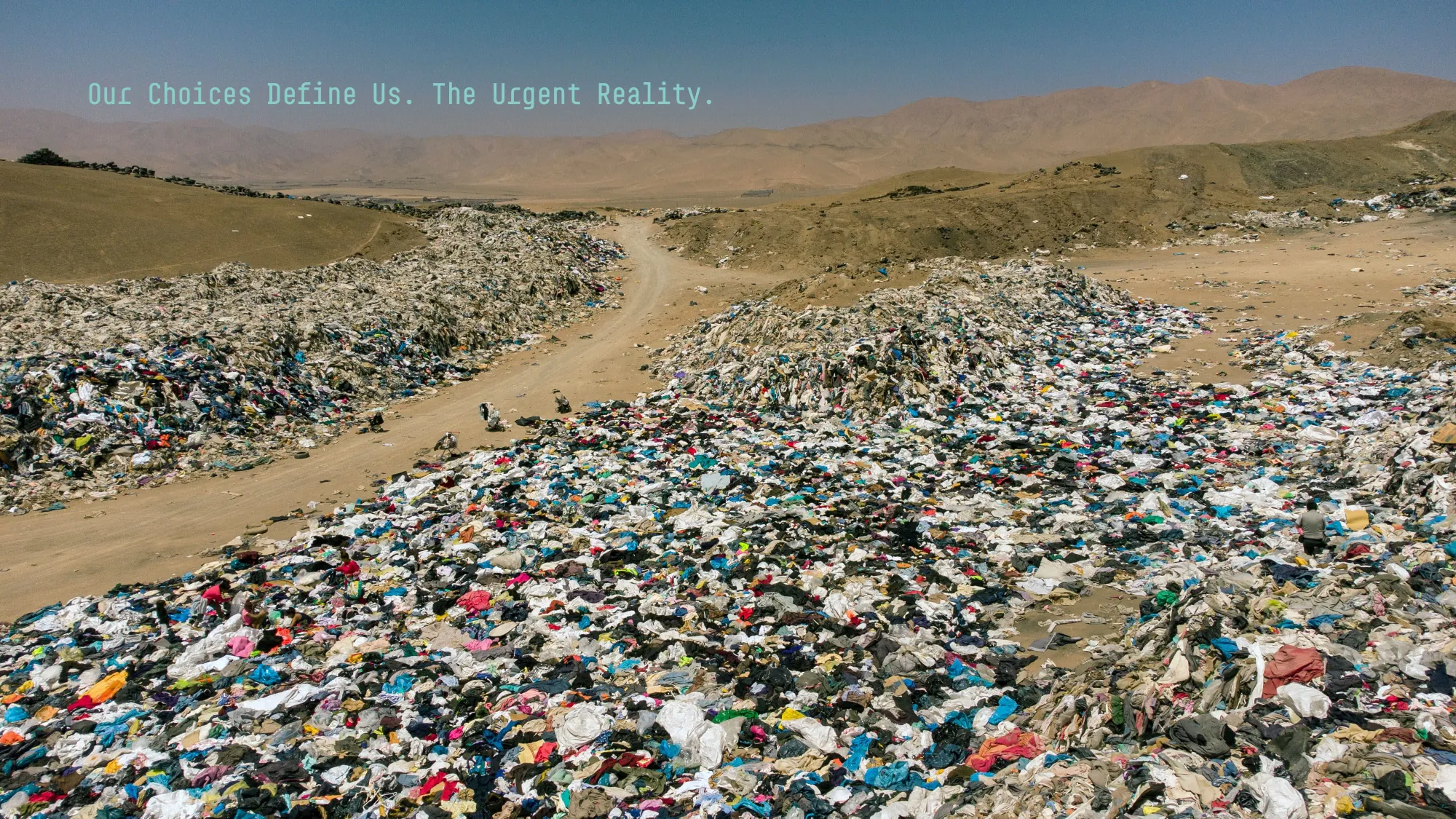
We wrote the pitch copy and the speech, and rehearsed the delivery with Steffen Gerlach. The speech opens on an image the audience can feel. “In the time it will take us to get to the end of this presentation, over 600 trucks of textile waste will have either been dumped into landfill or incinerated.”
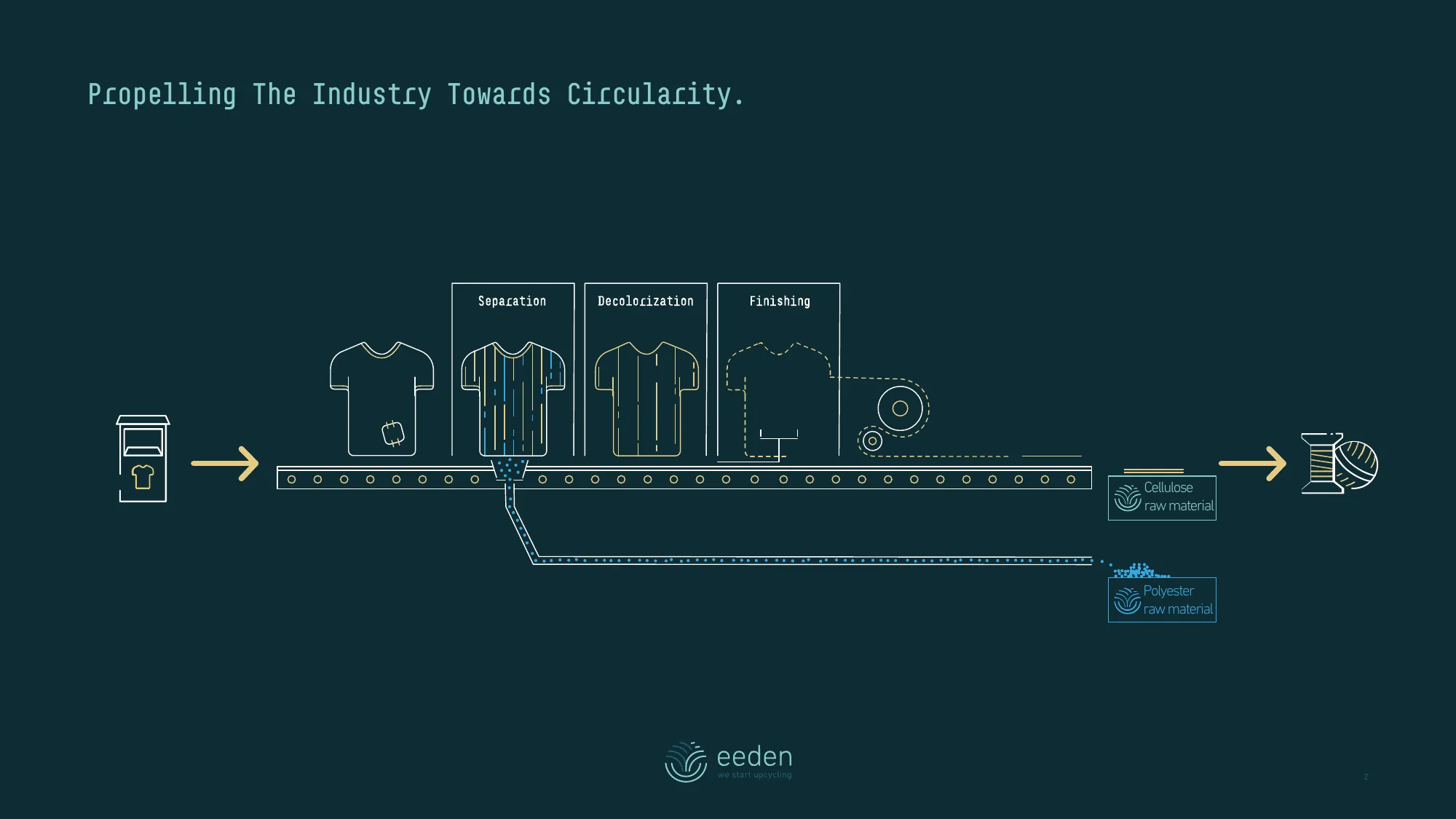
The pitch then shows what Eeden makes and how easily it fits a brand’s supply chain. It sets out the EU rules that will force the change and the gap between supply and demand for recycled fibre. The first draft of that slide framed the gap as Eeden’s opportunity. We rewrote it as the brand’s risk, because the person signing has to defend the decision to colleagues who never saw the pitch.
The close asks for one step. A no-risk Letter of Intent secures early access to pilot capacity and converts into a pilot contract. The last slide returns to the trucks.
First draft
The supply gap, framed as Eeden’s opportunity.
A reason for Eeden to exist
The 2030 Challenge
“By 2030, the gap between supply and demand for recycled fibre in the EU will reach a critical point, with a projected shortfall of 60%.”
The brand’s risk. The next slide asks it to secure capacity
- 01Our choices define us. The urgent reality.
- 02Propelling the industry towards circularity.
- 03Innovative engineering and tech set-up.
- 04We make circularity easy.
- 05Working with our materials.
- 06Facing the upcoming EU regulations.
- 07Future proofing your operations.
- 08And now we’re ready to scale.
- 09The 2030 challenge.
- 10Secure your position and capacity.
- 11From waste to worth.
What changed
A pitch that ends in a decision.
Eeden now has a brand strategy, its first stories and a sales pitch that ends in one ask. Eeden reports that the pitch helped it sign a major Letter of Intent with a global brand. Eeden keeps its partners confidential, so the brand is not named.
Every slide now leads to one signature.
“Brighter Future’s pitch development work directly contributed to our success in securing a major Letter of Intent with one of the world’s leading fashion brands.”
Since the work
Eeden later raised an €18 million Series A to build a demonstration plant. Our work supported the raise.
Source Refashion
Services in this workPositioning and Narrative Pitch Storytelling Science Storytelling
From the LibraryEeden. A Pitch Rebuilt Around the Signature a Brand Had to Give