 01
 02
 03
 04
 05
Sections
Teams can leave a positioning workshop energised, with colourful notes, new adjectives and no agreement on what the company sells. Two weeks later the website writer asks a simple question and the argument starts again.
The workshop surfaced the differences, and that has value. It finishes its job when those differences become decisions the next person can use. The free Brand Strategy System puts the test plainly in its account of what a complete strategy should produce. A team that finishes a strategy process inspired and cannot point to a decision it has made has run a workshop, and the strategy is still waiting.
How the decisions get recorded in our work
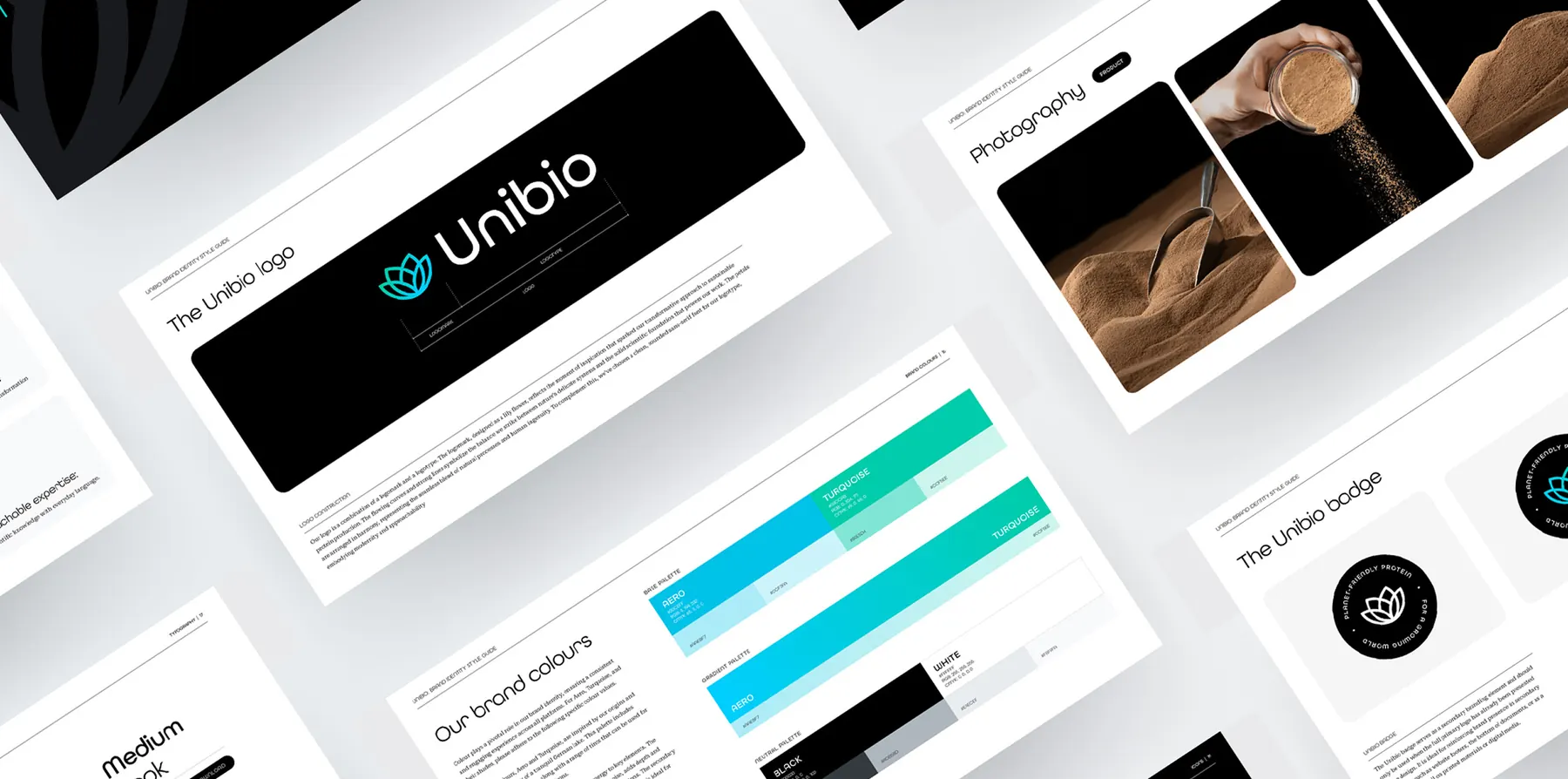
Our client cases record what each workshop decided. At Unibio, workshops with the CEO, COO, CTO and leadership team set the direction, vision, mission and values before any story or identity work began, so the protein-first story came from the top. At Gaia AI, a two-hour design review decided six choices, each written with its reason, such as "Ask visitors to get started, because the product is ready." DNAir's workshops and review rounds with the founders made five decisions, starting with "Lead with what air eDNA reveals, then the applications." At Fair Carbon, research and workshops with the team answered four questions, and the answers became the basis for the story, the identity and the site.
Each record is short. Each one tells a designer or a writer what to build without another strategy meeting. The Unibio, Gaia AI, DNAir and Fair Carbon cases set them out in full.
When we first wrote our process down, it paired the strategy workshops with customer and competitor research, used to find the narrative and visual space the industry had left open. Where a project includes that research, it comes before the workshop. The team arrives knowing how competitors describe themselves and what buyers use today, so the alternatives and the differentiated claim below start from evidence. Without the research, the team can still decide those two rows and mark them for testing in live buyer conversations.
The seven outputs to expect
| Output | What it records | Who uses it next |
|---|---|---|
| Audience hierarchy | One primary audience with the reasons, then the secondary and influence audiences | Everyone who writes or designs for the company |
| Offer and front door | What the company sells today, the offer a new customer meets first, and what stays as platform or future capability | Sales, the website and the investor deck |
| Alternatives | What the buyer does now, including inertia, an established supplier or doing nothing, and the cost of switching | Sales and the homepage |
| Differentiated claim | The main promise in the buyer's language and what makes it defensible | The homepage, the deck and the sales pitch |
| Evidence and uncertainty | The source behind each claim, its conditions and limits, what still needs customer or technical validation and the claims the company cannot yet make | Technical reviewers and every writer |
| Decision path | The action the first audience should take and what must be true before they can take it | Sales and the website's calls to action |
| Ownership and review | Who approves the strategy, who owns each open question and what would trigger a revisit | Leadership |
The outputs can be short. They earn their keep by being explicit and reusable. The audience tiers follow the audience lesson of the Brand Strategy System, which keeps one primary audience per asset and gives the rest of a buying committee materials of their own.
Write every decision in the same form
A decision record has a fixed shape, so the next reader can check it. For each decision, write the choice and how confident the team is, from 1 to 10. A claim about the market takes its evidence and the test that would confirm it. A strategic choice takes its rationale, the trade-off it accepts and the condition that would reopen it. Then name the owner.
One decision, recorded
- Decision
The choice in one sentence, such as Gaia AI's first, "Speak to customers first. Investors can follow."
- Confidence
A score from 1 to 10. Mark anything below 7 for follow-up.
- Support
For a market claim, the evidence and the test. For a strategic choice, the rationale and the trade-off.
- Revisit when
The result, contract or date that reopens the decision.
- Owner
The person who can change it.
The format turns disagreement into work. A difference in wording can be fixed in the room. A disagreement about readiness, the first market or the promised benefit goes to an owner with an evidence task, and stays marked as open until it is decided. Averaging three positions into a fourth sentence leaves all three in place. When Science, Sales and Leadership Describe Different Companies shows how to sort these disagreements before the session.
Turn the record into briefs
The decisions become useful when someone has to make something. The Brand Strategy System builds seven briefs from a finished strategy, one for each person who will make part of the brand.
Seven briefs from one record
- Design
The visual direction a designer works from.
- Voice
The tone rules and examples a writer follows from the first draft.
- Pitch narrative
The story the investor deck and the pitch are built on.
- New employee
What a new hire needs to explain the company in their first week.
- Homepage
The first reader, the offer, the strongest proof and the next action.
- Channels and content
The job of each channel and what it carries.
- Offer and message
The front-door offer and the words that describe it.
The briefs must agree with one another. If the sales deck still implies full commercial maturity while the evidence record shows a controlled pilot, the workshop has produced two sources of truth. Claims with scientific conditions need their own check, and the evidence register guide shows how those conditions travel into published text.
Test the workshop a month later
Three questions, one month on
- Can a new employee explain the proposition from the recorded decisions?
- Could a designer build the homepage without another strategy meeting?
- Have live buyer or investor conversations confirmed the main assumptions, or shown which ones to revisit?
The third question carries the most weight. A primary audience chosen from repeated buying conversations deserves more confidence than one chosen in a room. In our positioning work, customer research and live sales conversations test the new language after the leadership workshops, before the position is fixed.
A workshop that produced enthusiasm alone was a good conversation. A workshop that produced a decision record gives the website, the pitch and the next hire something to build from.
When your leadership team needs the category, value proposition and frame decided and tested, our positioning work runs the workshops and keeps the record. To run the process yourself, the free Brand Strategy System takes a team through all seventeen decisions.
Sources and further reading
- What a complete strategy should produce, The Brand Strategy System, Brighter Future
- Audience, The Brand Strategy System, Brighter Future
- Unibio case study, Brighter Future
- Gaia AI case study, Brighter Future
- DNAir case study, Brighter Future
- Fair Carbon case study, Brighter Future
- Positioning and Narrative for Climate and Deep Tech Companies, Brighter Future
Brighter Future worked with UnibioRead the case study
Studio servicePositioning for climate and deep tech companies
Tell us what needs to move.
Bring the brief if it is clear. If it is unclear, tell us where the work is stuck.
Bring us the problem