 01
 02
 03
 04
 05
What does nature storytelling need to make clear?
A nature story connects a change in a landscape with the people responsible for making it happen. It explains the work, the evidence behind it, who benefits, who carries the risk and what taking part involves. For a technology company, that can mean showing how a measurement changes a forest manager’s next decision. For a restoration developer, it can mean explaining the operating model behind a long-term project.
A project developer, a land manager, a corporate buyer and an investor may all read the same material and look for different answers. We agree the first audience and its working question before choosing the language or format. We ask what a forest manager will do with a measurement, what a company is being asked to buy, and what a funder would enable and what still depends on someone else.
Three kinds of nature work
- Nature technology
Show who uses the information, which decision it informs and what would change in the customer’s current process, with the evidence for performance at the depth the reader needs.
- Restoration and project development
Explain the landscape, the work on the ground, the organisations involved and the route from development to operation, with project status, responsibilities and the commitment being sought.
- Standards and programmes
Help developers understand how to take part and help buyers understand what an assessment establishes, with the methodology and current documents within reach.
A new standard’s launch is covered in more depth on our programme communications page.
How do you keep ecological evidence connected to the claim?
Ecological evidence stays connected to the claim when each statement names what it rests on. An observation, a model and a measured change answer different questions. A detected species establishes presence. Its abundance needs a further measure. A change in one indicator describes that indicator, and the condition of a whole ecosystem needs wider evidence. An outcome observed after an intervention needs a basis for attributing the change to that intervention.
We work with your specialists to keep these distinctions visible in the narrative, the charts and the supporting material. A reader can tell what was observed, where and when, which method was used, what the result supports and what remains uncertain. Our guide to biodiversity monitoring evidence sets out the questions a claim has to answer.
How should a nature project represent the landscape and its people?
A named place makes the work easier to understand. Its geography, livelihoods, history and operating conditions can explain why an approach is needed and what carrying it out involves.
We use approved accounts and images, with attribution and an agreed purpose. The people represented should recognise their situation in the finished work. Their experience explains the project, and technical evidence supports its ecological claims. Where a programme invites participation, the material explains which choices remain open, who holds authority and how contributions affect the result, built from the programme’s own process.
What can a nature communications engagement include?
The scope follows the audience and the question the material has to answer. It can include positioning, audience research and a first offer, a core narrative with versions for customers, investors, partners or programme participants, investor decks, buyer presentations and material for internal approval, websites, technical explainers and diagrams, project profiles and evidence-led impact stories, and launch material with a system the team can keep using.
We can begin with one defined piece. Where the position and the supporting material need to change together, we plan them as one programme of work. A project starts with the material you use now, the audience you need to reach and the next commitment you are seeking. We speak with the people who hold the scientific, operational and commercial substance, agree the position and the claim boundaries, then build and review the narrative before design. Your team approves the technical content and the use of project information, and a reader outside the project tests whether the explanation holds on first reading.
Relevant work
Wildsense was building a restoration standard in a market led by Verra and Gold Standard. We recommended a new name and supported the search, and the team chose Ecosystem Restoration Standard. The work covered strategy, naming, storytelling, identity, a website with separate routes for credit buyers and project developers, and launch materials. Founder and CEO Thibault Sorret said, “As a young company interacting with large corporates, building credibility was absolutely key to our business.” ERS now operates as Equitable Earth, and the case covers the work under the ERS name.
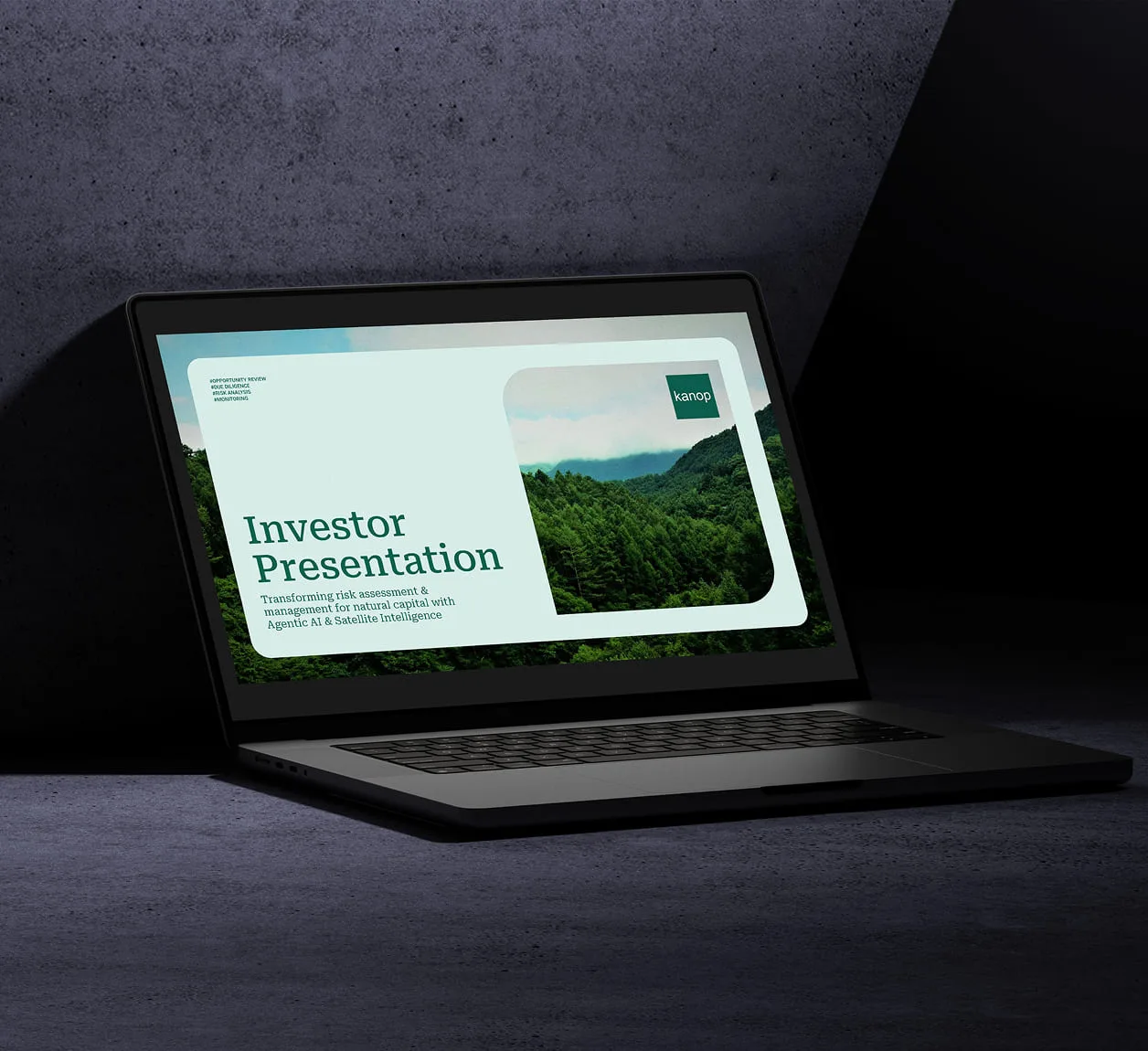
Kanop’s investor deck put its reasons to act after the ask and its strongest customer case in the annex. We rebuilt the narrative, writing and design, brought the customer case into the main story and placed the raise after the evidence. For DNAir, which captures DNA from the air, we worked with the founders on positioning, identity, a landing page, entry offers and a pitch, keeping the size of the vision while giving each audience a first use.
Gaia AI’s landing page now speaks to the people who manage forests, from planning plots and collecting data to using the inventory, and the company kept its identity. For Fronterra, a forest carbon and biodiversity operator in Peru, we developed positioning, identity, a website and investor materials around the work its team originates, engineers and operates.
Frequently asked questions
Can you explain biodiversity data to a commercial audience?
Yes. We start with the decision the data supports and build an explanation of the application, method, result and limits. The technical detail stays available for the people assessing the evidence. DNAir shows this for airborne eDNA, and Gaia AI for forest inventory data.
Can you help a nature project communicate with investors and buyers?
Yes. The materials share the same project facts, then answer the questions each audience brings. An investor assesses the business or project and its capital requirement. A buyer needs the offer, evidence, terms and responsibilities attached to a purchase. We develop the narrative and materials with the team and its advisers. Investor storytelling and buyer presentations cover each side in more depth.
Do we need a new identity?
That depends on what is in the way. Gaia AI kept its identity while the words and page structure changed. ERS needed a new name and identity to express a different institutional position. We establish the problem before deciding the scope.
How do you handle claims about impact?
We record the source, scope, date and status of each claim, then keep those qualifications close to where it is used in public. Your scientific and specialist advisers approve the substance. Our impact story guide explains the approach.
Related guides
By Aaron C. Leaman, founder of Brighter Future Studio. Updated 7th of November 2026.