 01
01 02
02 03
03 04
04Sections
Climate messaging fails when the evidence is asked to do every job at once. Most climate communication starts at planetary scale, with targets, anomalies and end-of-century scenarios, and leaves the audience to find the link to their own world and their own next move. The research on story, efficacy and memory points to a plainer fix, which is to connect the evidence to a specific reality, a consequence the reader recognises and an action they can take.
It is 38°C as I write this
The air feels used. Movement takes more effort. By mid-morning the back of my shirt is already wet.
Climate communication usually begins somewhere else. It begins with a temperature anomaly, a global target, a parts-per-million figure, a probability range or a 2100 scenario. Those numbers matter. They are the evidence. The trouble starts when the evidence also has to supply relevance, agency and a reason to act.
A person can understand a climate statistic and still feel no relationship to it. They can accept the science and still have no sense of what they could change. They can care about the problem and still be unsure what an organisation, product or policy is asking of them. Better climate communication needs a structure that links evidence to lived consequence, possibility and a proportionate next step. Adding emotion to facts leaves that structure missing.
Climate has been communicated at the wrong altitude
For decades, public climate language has been distant in time, distant in place and technically abstract. The familiar grammar is 2050, end of century, global average temperature, gigatonnes, sea-level rise and parts per million. Each measure is useful for science and policy. Together they turn an intensely physical phenomenon into something most people meet as abstraction.
Heat itself is physical. It changes sleep, concentration, appetite, movement and risk. A flood changes a school, a road, an insurance decision and a family budget. Drought changes a field, a reservoir and a food price. A good climate story keeps the aggregate and connects it to one of these particular cases. The larger evidence shows the pattern. The particular case shows what the pattern means inside a human system.
This matters because public opinion is more layered than a simple information gap. Yale and George Mason's Climate Change in the American Mind surveys report belief, worry and policy support alongside a separate measure of collective efficacy, the sense that people like the respondent, working together, can affect what government does about global warming. The research treats belief, relevance and perceived ability to act as distinct questions. Communicators should too. A message that raises belief can leave efficacy exactly where it was.
What story does in the mind
Popular explanations of storytelling neuroscience often overreach. The version that circulates on slides claims facts activate two language areas while stories activate everything else. Narrative processing is more distributed and more dependent on context than that, and the evidence supports a narrower and more useful claim.
Understanding a narrative draws on language, memory, social inference, emotion and mental simulation. A 2024 review by Janice Chen and Aaron Bornstein in Trends in Cognitive Sciences, The causal structure and computational value of narratives, describes narrative as a way of representing causal relationships between events over time. Stories show how one state leads to another. Lists of facts leave that work to the reader.
Research on narrative transportation adds that absorption in a story can shape attention, emotion, recall and sometimes attitudes. These findings support a modest craft principle. Causal structure, specific detail and human consequence make complex material easier to model in the mind. A story still needs a sound case underneath it. Climate communication needs no exaggerated neuroscience to justify good storytelling. Our companion piece on the neuroscience of storytelling sets out what the evidence supports and where the popular claims break down.
Specificity makes a system inspectable
Compare two openings. The first says that extreme heat increases mortality and threatens vulnerable populations. The second begins with a care worker moving between rooms during a heatwave, changing wet towels, checking water and listening to fans push hot air around.
The first statement names a category of consequence. The second gives the mind an event with people, sequence, setting and stakes. Strong communication uses both. The scene orients the reader, and the evidence establishes that the scene belongs to a wider pattern. Specific detail makes a system inspectable at human scale.
The same principle applies to companies. "We decarbonise industry" names a category. "A cement producer pays separately for fuel, carbon exposure and process heat, and our system changes the economics of one kiln line" gives the listener something to evaluate. The company can then bring in the data, and the data now has a place to land.
Why fear without agency leaves the decision unchanged
Climate stories often swing between catastrophe and optimism. Neither works alone.
Threat matters because stakes matter. A message that raises perceived severity without raising perceived efficacy can leave the audience better informed and no clearer about what to do. Hart and Feldman's 2014 study of US network news coverage, Threat Without Efficacy?, examined how climate stories carried threat and efficacy information, and the title names the pattern. Their later experimental work tested political efficacy messages as a route to climate activism, with emotion as the mediating path. The practical lesson is direct. A climate message needs a path from consequence to agency.
Agency here means a next move that is visible and credible. A cheerful ending is optional. For a household the move may be one action. For a procurement team it may be a supplier qualification. For an investor it may be a diligence step. For a city it may be a heat adaptation budget. For a founder it may be a pilot, an offtake conversation or a project-finance structure. The ask should fit the evidence. A dramatic story followed by an impossible ask creates emotional intensity and no decision.
The messenger and the decision context
Climate communication is also social. Audiences judge who is speaking, what that person appears to know, what they appear to want and whether the message belongs in their world. The same claim lands differently from a scientist, a farmer, a founder, an insurer, a local doctor, an engineer or a politician.
The practical response is to understand the decision in front of each audience. A corporate buyer already accepts that climate change matters. They need to see what the change means for supply, cost, regulation, resilience or customers. An infrastructure investor needs a different case. A community living beside a project needs another.
Brighter Future's Story System separates stories for this reason. Origin, Purpose, Vision, Customer, Product and Impact each do a different job. Climate communication weakens when one moral story has to carry every audience and every decision.
The same failure inside climate companies
The public problem shows up inside companies too. A founder has lived with the science for years, so the causal chain feels obvious. The public materials then open on a broad planetary problem, jump to a technical mechanism and finish with an impact number. The reader's own decision is missing from the sequence.
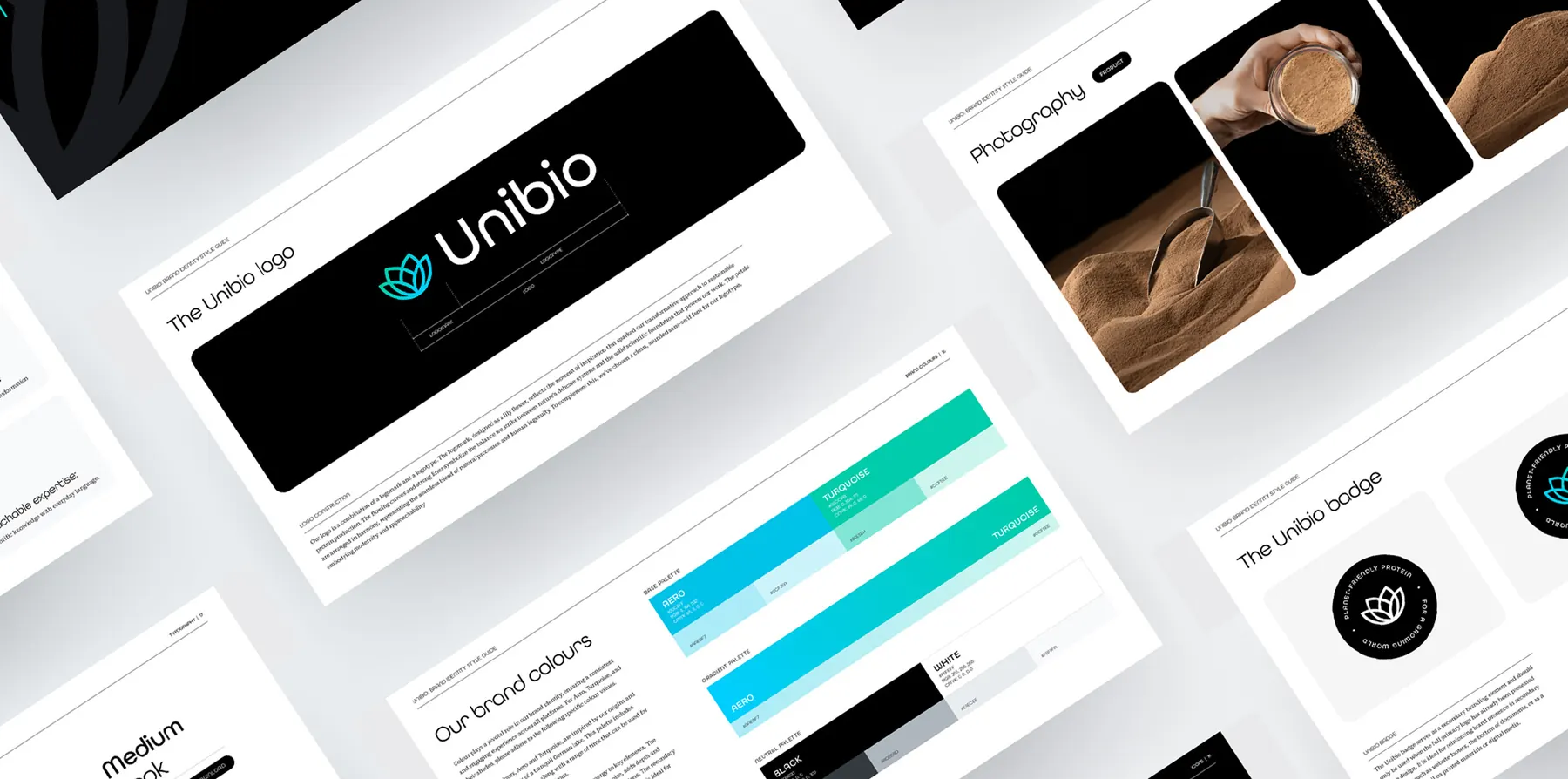
Unibio shows the pattern from our own work. The gas fermentation technology was sophisticated and central to how the company created value. The commercial story became stronger when the protein product moved to the front. Buyers first needed to understand what they were evaluating and why it mattered in their world. The technology then served as evidence for the product. We summarised the shift as "Lead with protein. Let the technology prove it."
Evidence becomes more useful when it arrives inside a structure that answers four plain questions. What is happening. Why it matters here. What can be done. What evidence supports the move.
A more useful climate message sequence
A clear climate message can often be built in five moves.
- Start with a specific reality. Give the audience something concrete enough to picture or recognise.
- Connect it to the wider pattern. Bring in the evidence, the scale and the uncertainty, and say what the example shows and where it stops.
- Name the consequence in the audience's world. Cost, health, resilience, regulation, supply, risk, performance or quality of life often carry more weight than an abstract climate benefit.
- Make agency visible. Explain what changes the situation and which actors can move it.
- Ask for a proportionate next step. Match the action to the maturity of the evidence and the authority of the reader.
This sequence will not make a climate message universally persuasive. People disagree about policy, economics, values and trade-offs. Some decisions stall for rational reasons. A good message brings those constraints into view.
Keep the evidence visible
Storytelling should make evidence easier to see. For evidence-heavy climate work I separate four layers.
- Claim
- Evidence
- Boundary
- Implication
The claim says what is being asserted. The evidence shows why the claim deserves attention. The boundary says where the evidence stops. The implication explains what the evidence changes for the decision. This matters most when the story is vivid. The stronger the emotional scene, the tighter the factual boundary should be.
A heatwave makes climate exposure immediate, and one event cannot by itself establish attribution. A successful pilot shows technical performance, and project economics need their own proof. A customer conversation shows interest, and an order is a separate event. Story and evidence each do their own job. Our guide to evidence-based storytelling works through the boundary layer in more detail.
From awareness to decision quality
Much climate communication still assumes its job is to make people care. For many audiences that is no longer the most useful starting point. The harder questions are practical. Which action is relevant. Which solution deserves trust. What the change costs. Who carries the risk. Which claim can be defended. What happens first.
Before publishing a climate message, run five checks. The opening contains something a reader could picture. The evidence sits next to the claim it supports. The consequence is named in the audience's terms. One actor and one next step are visible. The boundary of the evidence is stated. A message that passes all five moves climate communication towards decision quality.
The temperature outside may make the problem impossible to ignore for a few days. Good communication should still work when the weather changes.
Brighter Future helps climate and science companies build this structure into their positioning and messaging.
Sources and further reading
- Climate Change in the American Mind, Politics and Policy, Fall 2025, Yale Program on Climate Change Communication, 2025
- The causal structure and computational value of narratives, Chen and Bornstein, Trends in Cognitive Sciences, 2024
- Threat without efficacy in climate coverage on US network news, Hart and Feldman, Science Communication, 2014
- Using Political Efficacy Messages to Increase Climate Activism, Feldman and Hart, Science Communication, 2016
Tell us what needs to move.
Bring the brief if it is clear. If it is unclear, tell us where the work is stuck.
Bring us the problem