 01
01 02
02 03
03 04
04 05
05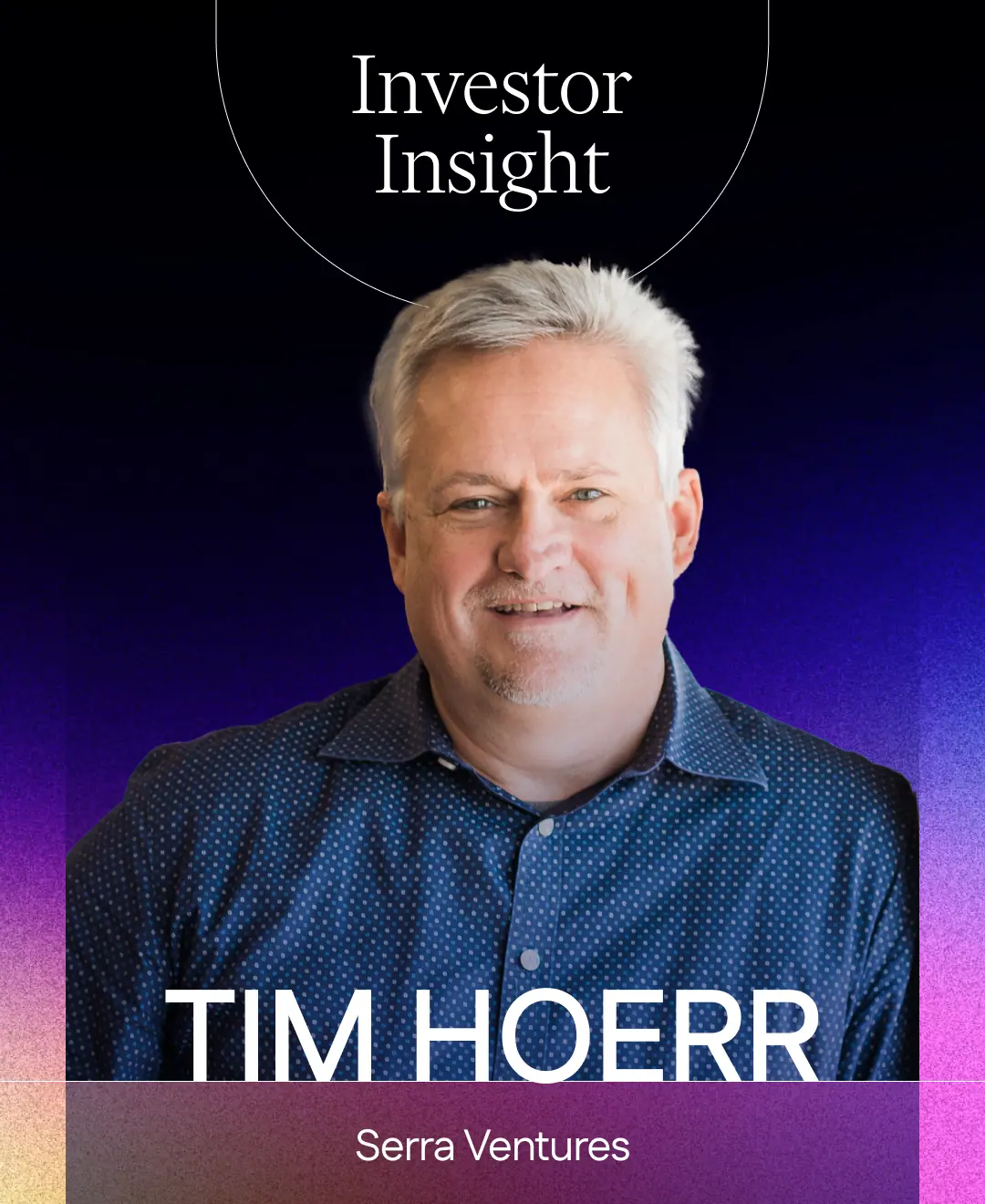
Brighter Future editorial analysis · 27th September 2026
What this interview reveals
Ag tech, read broadly
Hoerr grew up in a family garden centre and nursery business, and had about 40 years in business and 15 in venture. In 2024 Serra invested only in ag and food tech, defined widely. “If there's a company solving a big problem anywhere along the supply chain,” he said, “we're going to take a look.” Cheques ran from $250,000 to $2 million, seed to Series A, mostly in the US with up to 25% of the fund elsewhere. The first ag tech fund of $45 million was still making follow-on investments in 23 companies, and Fund II had closed $22 million towards a $100 million target. He named ag fintech as underinvested, especially microfinance for farmers in developing countries.
The A-plus team with the B-plus idea
Hoerr put his priority in one line. “If I'm given a choice [between a great idea or a great team], I'm going to take the B-plus idea and the A-plus team.” A shaky economy had made him more selective, and resilience became the test. He wants technical and business talent together, and he asks how founders responded the last time they were knocked down. Diligence then goes to customers, to learn whether the product solves their problem. He prefers better movers, companies that improve on an existing idea.
Arrive ready and referred
His advice starts with pain in the market. Before approaching a VC, founders should mature the business model through customer contracts, grants and other funding. The best route in is a referral, and accelerators provide one. Hoerr sat on the board of an accelerator programme at Baylor University for more than a decade, and Serra keeps relationships with several. He credits the best of them with helping founders write their story, build the value proposition and make connections. “When you graduate from the accelerator, you’re in great condition to be referred.”
What we would carry into the brand
A startup pitching Serra would give the team slide the most care, with one setback and what the founders did next. The customer case follows, built from contracts and from customers describing the problem in their own words. In our reading, the belief gap with this investor, the distance between sound evidence and a decision he can defend, sits in buyer commitment, so signed customer contracts should lead the evidence. Companies beyond the farm gate should say where on the supply chain they sit, since that is how Serra reads its mandate. Hoerr's own test for product-market fit is a question a founder can put to every slide before sending the deck.
It’s just a fancy way of saying: is the solution being embraced by the marketplace, or is this a hammer looking for a nail? - Exact excerpt from the historical interview
The conversation
Historical investor interview: originally published 30th of September 2024. The historical interview feature below is preserved verbatim. Roles, fund details and affiliations reflect the publication date unless a later update is explicitly labelled.
Serra Ventures
- Check size: $250,000 to $2,000,000
- Stage: Seed, Seed Plus, Series A
- Fund Size: Prior Ag Tech Fund (still deploying capital to follow-on rounds of 23 companies): $45 million; Present Ag Tech Fund II has $22M closed to date, and continuing to raise until June 2025 with a target of $100 million
- Industry Verticals: Ag and Food Technology, with the three subthemes of Sustainability, Healthy Climate, Digital Farm
- Geographies: Primarily U.S., but up to 25% of the fund will be "rest of world"
- Portfolio companies: Agtools, Barn2Door, Bonsai Robotics, Breedr, CamoAg, Earth Optics, and more
Tim Hoerr is a good-natured man from farm country, and grew up in a family-run garden centre/landscape nursery business. He has a practical bent, with about 15 years in venture investing and about 40 years in business in general. He was also board member of a business accelerator program for more than a decade at the major American university, Baylor.
At the start of our conversation, Tim told us that for 2024, Serra Ventures invested exclusively in ag and food tech. He said that Serra's definition of “ag tech” was broad, and included parts of the ag tech supply chain. "If there's a company solving a big problem anywhere along the supply chain," Tim said, "we're going to take a look."
Tim's investment criteria have evolved in the last few years, he said. Because the economy has been shaky in some ways, he's been forced to be more selective with who he invests in. He told us a common question he asks is, "is this a team that can ultimately exhibit resilience in the face of a difficult environment?"
"That's a hard thing to gauge," he said.
For Serra, a team needs to roll with the punches. Tim said it really was "more about the team than pretty much anything else," and that he cared most about finding teams with both technical and business talent. "They've got to convince us they can be resilient,” he said. “The best predictor of resilience is, have they been knocked on their ass in the past, and how did they respond to that?"
"If I'm given a choice [between a great idea or a great team], I'm going to take the B-plus idea and the A-plus team. I think the A-plus team is going to be able to pivot the B-plus idea into the right product-market fit." Continuing on that topic, Tim said product-market fit was one of the things they prioritised. "It’s just a fancy way of saying: is the solution being embraced by the marketplace, or is this a hammer looking for a nail?"
He said that Serra also needed to see large market opportunity, and related this to a question about Serra's due diligence process a few minutes later. When Serra looks into a company prior to investment, Tim said, "it's really about getting a great handle on how the market is, and how the customer base is embracing the product. Is it really solving their problem? Do they want to see something different from the company? Are they happy with the solution, and so on?"
For the cases where companies might not receive investment, or even fail, Tim said startups fail because of failure to execute, and perhaps more importantly, " 'humans doing stupid things.' "
Does Tim prefer first movers or better movers? Better movers, he told us. Tim preferred companies working with an existing idea and improving on it (a "better mover"). "More often than not, we tend to invest in the company that is more of a best mover as opposed to a first," he said.
Finally, we came to some of our most important questions: what advice would Tim give startups seeking advice in the current market? And what was the best thing a startup could do when first reaching out to a venture fund? "Number one," he said, "you absolutely want to have a solution that is solving pain in the marketplace."
Additionally, before startup founders first reach out to an investor, Tim thinks it's extremely important to get their company to the point where it’s really ready for an investor interaction.
He said businesses should "mature their business model and value proposition through other means— contracts with potential customers, grants, other forms of funding" and "get themselves into a really solid position" before approaching a venture capitalist. If you’re a founder who’s decided to seek VC funding, Tim thinks the best way to do this is via some avenue of referral. He suggests applying to multiple accelerators, as these have become much more common in the last decade.
Accelerators will help you with your brand storytelling, he suggested, among other things. "Some of the very best accelerators will do a great job of helping you write your story better, build your value proposition, build your business model, and make connections,” he said. “When you graduate from the accelerator, you’re in great condition to be referred," he said before adding, "We often maintain relationships with a number of different accelerators."
We asked Tim what areas in climate seemed underinvested. One example he gave was ag fintech, citing microfinance-style solutions for farmers specifically— and especially farmers in developing countries.

How does Tim see the investment landscape evolving in the next few years? He feels we're at the end of the downturn in the market from the last two years or so. "I think over the next couple of years, we're going to see better M&A activity, better availability of capital to startup companies, and hopefully more institutional investors coming back into the venture class to support it."
As the climate tech sector continues to evolve, investors like Tim play a huge role in shaping its trajectory. By focusing on scalable, impactful technologies and the teams that can bring them to market, they're working to ensure that the innovations of today become the climate solutions of tomorrow.
To learn more about Serra Ventures, please visit www.serraventures.com.
Tell us what needs to move.
Bring the brief if it is clear. If it is unclear, tell us where the work is stuck.
Bring us the problem