 01
01 02
02 03
03 04
04Sections
Climate founders often have a stronger reason to exist than companies in less mission-led categories. That is an advantage until the mission starts standing in for the product. The homepage opens with the future of the planet. The deck explains an enormous climate problem. The founder speaks well about why the system has to change. Several minutes later the buyer or investor still cannot say what the company sells, who pays and what has been demonstrated. The fix keeps the mission and connects it to a commercial and evidential sequence.
Mission gives the work meaning
Purpose and mission earn their place when they change decisions. They guide what a company builds, who it serves, which partnerships it accepts and what it refuses to claim. The trouble starts when public communication stays at that altitude.
"Decarbonise heavy industry" can be a legitimate mission. A plant manager still cannot tell which process changes. "Build a circular food system" can guide a company, and a food manufacturer still cannot tell what ingredient is available. "Restore nature at scale" is meaningful, and it says nothing about the commercial structure of a restoration project. Mission answers why the work matters. Product and proof answer why this company should be believed. The purpose story has its own job in the Story System, and it works best when the Product and Impact stories sit beside it.
Start with the change around the customer
Strong climate tech positioning often begins outside the company. A regulation changes. A material becomes scarce. A technology crosses a cost threshold. A buyer receives a new reporting duty. A procurement category becomes real, or a gap opens between supply and demand. That external change creates the context for the product.
Textiles show how this works. The EU's revised Waste Framework Directive entered into force in October 2025 and makes producer responsibility for textiles mandatory across member states. Eeden, a textile recycling company, built its partnership story on this kind of change. The story connected the company to upcoming regulation, to future demand for recycled textile inputs and to the gap between that demand and available supply. The company then entered as one response to a market condition the reader already faced. The Eeden case sets out how that story was built, and our guide to the why-now narrative covers the method in full.
The sequence is simple. Show the changed world, then the decision it creates, then the product, then the proof.
Give the science a job
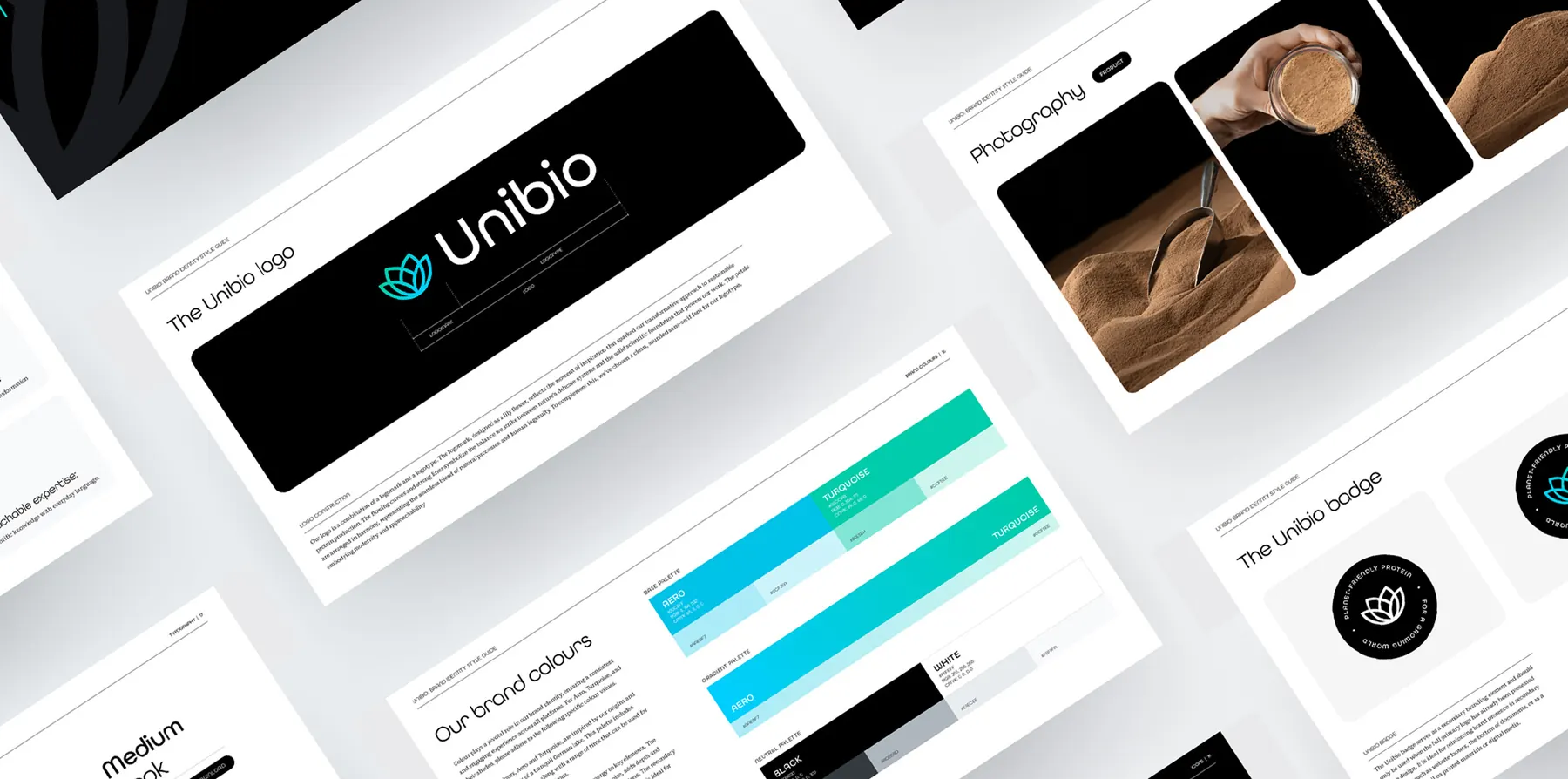
Technical founders often lead with the mechanism because the mechanism is the hard-won invention. Unibio's gas fermentation process was central to its advantage. A feed buyer first needed to understand the protein, its role and its commercial relevance. Moving the product forward left the science intact and gave it a job, captured in one line from our Unibio work. Lead with protein. Let the technology prove it.
Technology explains how value becomes possible. The product is what someone can buy, specify, test, integrate or approve. In B2B climate and biotech, the product usually needs to be legible before the full platform story arrives. We explore the distinction further in technology versus product.
Product proof has layers
Climate tech communication often compresses very different evidence into the single word traction. A laboratory result, a pilot, a letter of intent, a signed offtake, an operating project and repeat purchasing are all evidence. Each one answers a different question.
Say which question each proof point answers. A pilot supports a technical claim under defined conditions, and commercial-scale economics still need their own evidence. An LOI shows serious interest and carries no revenue. A grant shows public interest in the project and tells the reader little about customer demand. The US Department of Energy's Pathways to Commercial Liftoff reports make the same separation at national scale, treating technical progress and the market, investment and deployment conditions for scale as distinct questions.
Mission-led companies gain credibility when they resist upgrading every signal into the strongest available commercial word. A reader who finds one inflated claim discounts the rest.
One truth, several cuts
Different readers enter the same company through different doors. An investor enters through market change, defensibility, team, economics, scale and the capital pathway. A buyer enters through a recognised problem, product performance, integration, price, supply and risk. A public funder looks at industrial capacity, policy delivery and additionality. A strategic partner needs to see mutual value and the role each party plays.
One company can therefore need several narrative cuts, each shaped to the decision in the room. The evidence, the position and the product stay fixed while the emphasis moves. We cover how to hold that line in how one positioning survives different rooms.
Trust signals change with the question
Fronterra develops forest carbon and biodiversity projects in Peru, four projects across more than 1.6 million hectares, Verra-listed and held under long-term concessions. Its public face read like a mission-led initiative. Readers who needed to know whether the organisation could deliver found cues that mainly showed it cared.
The Fronterra repositioning kept the mission and changed the trust signals. Projects, capability and operating reality moved to the centre, and the organisation now presents as a principal operator. Originate. Engineer. Operate. Mission cues help a reader decide whether an organisation cares. Institutional cues help a reader decide whether it can deliver, and a climate company usually needs both.
A narrative sequence to test
This order works as a first draft for most climate tech companies.
- World change.What external condition changed and why it matters now.
- Decision.Which buyer, investor or partner now faces a new problem or opportunity.
- Product.What they can evaluate, purchase or support.
- Proof.What has been demonstrated at the current stage.
- Mechanism.Why the product works and why the advantage may last.
- Economics and risk.What the decision costs, saves or exposes.
- Mission and scale.Why the work matters if the model succeeds many times over.
The mission stays in the story as the horizon the commercial case moves towards. The opposite failure exists too. A story can become so functional that the company loses its reason to exist, and climate technology often needs market education, policy change, partnership and patient capital. A purely transactional story undersells the size of the transition.
- Purpose
- Market change
- Product
- Proof
- Vision
Purpose gives direction. Market change gives timing. Product gives relevance. Proof gives credibility. Vision gives trajectory. To test your own messaging, read the first screen of your homepage and the first three slides of your deck. A stranger should be able to name the product, the buyer and one piece of evidence by the end. If they can only name the mission, the sequence needs rebuilding.
Brighter Future builds this sequence into positioning, websites and decks through our positioning work.
Sources and further reading
- DOE Releases New Reports on Pathways to Commercial Liftoff to Accelerate Clean Energy Technologies, US Department of Energy, 2023
- Revised Waste Framework Directive enters into force, European Commission, 2025
- EU Publishes Revised Waste Framework Directive, mandatory textile EPR and food waste targets enter into force, EXPRA, 2025
Tell us what needs to move.
Bring the brief if it is clear. If it is unclear, tell us where the work is stuck.
Bring us the problem