 01
01 02
02 03
03 04
04Sections
Climate-tech positioning works best when it starts with a change in the market, names the person that change puts under pressure and shows the advantage the company can prove in answering it. Adjectives such as innovative, sustainable or disruptive come last, if at all. A good position makes a real decision easier for a real buyer, and the tagline follows from it.
Positioning is one of seven decisions in a full brand strategy for climate tech. This piece covers that one decision in depth, from the market shift to the final line.
Start with what changed
A company becomes relevant when its audience can see why the old situation no longer holds. The shift might come from regulation, input cost, supply, infrastructure, reporting duties, customer behaviour, technical capability, financing conditions or physical climate risk. Most real shifts combine several of these. The strongest positioning uses these forces as working parts of the argument. It shows how the change alters what the audience has to decide, and when.
Regulation gives the clearest examples. The EU's Carbon Border Adjustment Mechanism entered into force on 1 January 2026 in its definitive regime, which changes the cost comparison for importers of carbon-intensive goods. A low-carbon materials company can position against that change directly. The buyer already has a new line in the budget, and the company explains how to shrink it. Economic shifts work the same way. In 2023 the IEA asked whether solar PV and wind costs would finally begin to fall again, and any company whose case depends on cheap clean power sits downstream of that curve.
Eeden, a textile recycling company, shows the pattern in our own work. Its technology could be explained on its own terms, and that gave a buyer little reason to act. The more useful commercial story connected the company to the world around it, through upcoming regulation, future demand for recycled textile inputs and the gap between that demand and available supply. The company then entered as an answer to a decision that already mattered. Few companies should copy that scarcity story. The lesson is to build the why-now from conditions the audience can observe. The full timing argument has its own guide on building a credible why-now case.
Choose the person under pressure
A sector is too broad to position against. "Textiles" or "heavy industry" describes a market. "Sustainability leaders who need credible circular-material supply while their commercial teams worry about cost, quality and scale" describes a decision context. So does "the procurement lead at a cement importer who now has to report embedded emissions and price them".
Good positioning names who has to understand and believe the proposition first. In industrial climate technology that person is often someone other than the end user. The buyer, the technical reviewer, the project partner and the capital provider can sit in four different organisations. The position needs one front door even when the stakeholder system behind it is complex. Choose the person whose yes unlocks the others, and write for them.
Map the alternative they use today
The direct competitor is only one option on the table. The buyer may keep the incumbent material, delay the project, build a solution internally, use a manual process, hire a consultant or do nothing at all. Each of these has a cost, and most carry less perceived risk than switching to a new supplier.
Positioning gets sharper when it explains why the new approach is worth the cost of change against the actual alternative. "Better technology" rarely clears that bar on its own. The claim needs a decision, a constraint and a piece of proof attached. Better at meeting the new reporting duty, at a known cost, with a pilot that shows it works in a comparable plant.
The US Department of Energy frames this gap with its Adoption Readiness Levels, which assess how ready a technology is for commercial adoption, as a companion to its technical maturity. Positioning is where a company answers those adoption questions in the buyer's language.
Find the advantage you can prove
A useful position rests on evidence. List what the company can demonstrate that the chosen audience cares about. The candidates include performance, cost, feedstock access, ease of integration, deployment speed, data quality, operating track record, product specification, project pipeline and manufacturing route.
Then test each claimed advantage against scrutiny. Work out what a sceptical technical reviewer would request and check whether the company can hand it over today. Where the evidence is thin, weaken the claim or collect better evidence before launch. A position built on a claim the company cannot defend creates communication debt that someone pays later, usually in diligence or in a lost buyer.
Lead with relevance and let the technology prove it
Technical founders often assume the most novel part of the business should lead the story. Sometimes it should. More often the buyer first needs to understand the product, the outcome or the project. Technology can be the moat and still sit behind the product in the story.
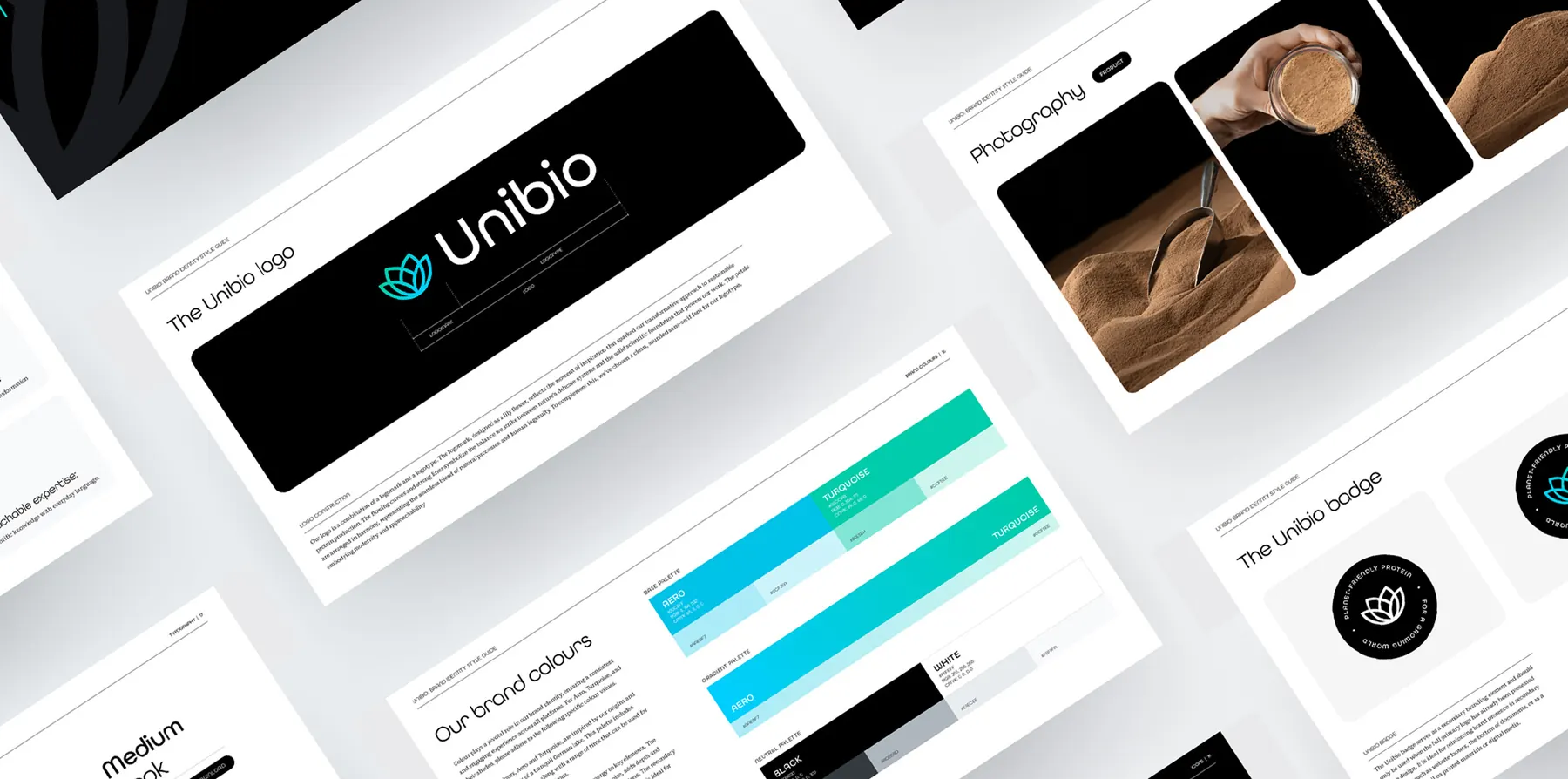
Unibio shows the pattern. The company uses gas fermentation to make protein for feed. The fermentation technology matters to the business and to its defensibility. The commercial story became clearer when the protein product led and the technology moved into the role of proof and defence, summed up as "Lead with protein. Let the technology prove it." Feed producers could place the company in their world straight away, and investors could still follow the technical case underneath. Relevance comes first, and the mechanism appears where it earns belief.
Make the position hold across rooms
A position is stable when it can adapt to each audience without breaking. An investor wants to see scale and trajectory. A customer cares about the operating outcome. A partner looks for shared value. A new hire wants the Purpose and Vision stories from the Story System. Each cut emphasises different evidence while the centre stays fixed.
When every audience seems to need a different definition of the company, the strategic centre is still unresolved. That is a useful finding. It usually means the team has not yet chosen between two businesses, and no amount of wording will settle it.
How to write and test your positioning
Write the positioning line last. A template filled in on day one produces a sentence with nothing underneath it. Build the argument first, in this order.
- What changed in the market.
- Who is under pressure because of it.
- What they do about it today.
- What that alternative leaves unsolved.
- What the company makes possible.
- What advantage the company can prove.
- Why the timing matters now.
Then compress the argument into one or two sentences. The line is the compression of the strategy, and the seven answers are the strategy itself. Our course, Build the Strategy Before the Brand, works through the same sequence.
Test the result by what it changes. A working position alters the homepage, sales qualification, product priorities, the investor narrative, partnership choices, the evidence the team collects and the markets it deliberately leaves alone. If the only visible outcome is a new tagline, the work stopped too early. Run the seven steps with your leadership team this week and compare the answers side by side.
Brighter Future builds this work as positioning for climate and science companies.
Sources and further reading
Tell us what needs to move.
Bring the brief if it is clear. If it is unclear, tell us where the work is stuck.
Bring us the problem