 01
01 03
03 04
04Work / Brighter Future initiative · Zürich
The Decision Room
Build the room around the decision.
Many of the hardest decisions in climate, nature and industrial transition sit between institutions. An investor sees the opportunity and cannot carry the technology risk. A company is ready to build and still needs a buyer. A public body can de-risk one part of the chain. Brighter Future created The Decision Room to work in that gap.
- Case type
- Venture built from zero
- Organisation
- A Brighter Future initiative
- Location
- Zürich
- Work
- Strategy, programme, brand, digital, commercial model, operations
Brighter Future developed the initiative end to end, from strategy, positioning and the model to the brand, the site, the programme and the commercial system.
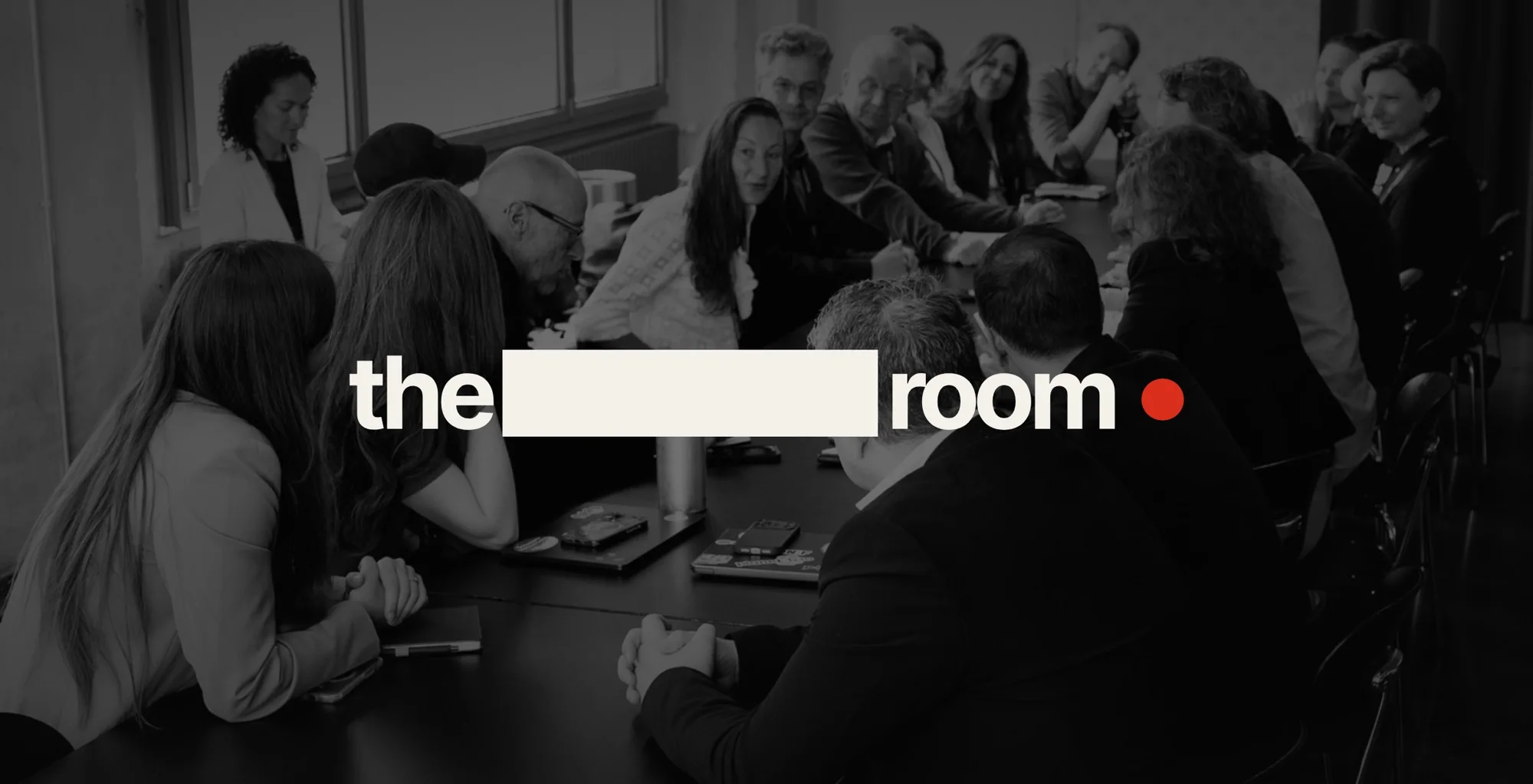
01 · Start with the constraint
Constraint first. Format last.
A conference can gather impressive people and leave the problem where it was.
The Decision Room works backwards from the point of friction. First it defines what is stuck. Then it finds the people whose decisions depend on each other. Only then does it choose the format.
A question about alignment needs a small Roundtable. A live company, plant, landscape or transaction needs a Workshop. Some problems need the wider market in view, so they belong on the Capital Floor. The format follows the constraint.
One live
constraint
- Investor
- Company
- Buyer
- Public finance
- Regulator
- Operator
- Technical expert
- 01Constraint
What is stuck.
- 02Decision-makers
Who holds each part of it.
- 03Room
The format the problem needs.
- 04Output
What became clearer, and what stayed open.
- 05Owner
Who carries the next move.
- 06Next action
What happens, and by when.
- 07Record
Where the work goes after the day.
02 · The product
The room was one part of the product.
Edition I ran in Zürich on 8th May 2026, with eight closed-door rooms recorded alongside an open market floor. The day worked, and it showed what the model still needed. A one-day convening needed a system behind it.
The Capital Floor became the connective tissue, a live market where investors, allocators, companies and corporate buyers can find each other around the day’s questions. The rooms stayed small enough for judgement. Positions make each participant’s mandate and needs visible before the day. Back Tables carry single questions between Editions, and The Record gives each room’s output somewhere to go.
- Capital FloorA live market around the programme, open all day.
- RoomsRoundtables for alignment. Workshops for one live case.
- PositionsMandates and needs made visible before the day.
- The RecordConclusions and commitments, carried beyond the room.
- Back TablesSmaller evenings that carry one question between Editions.
03 · Brand and digital
A working institution, in look and use.
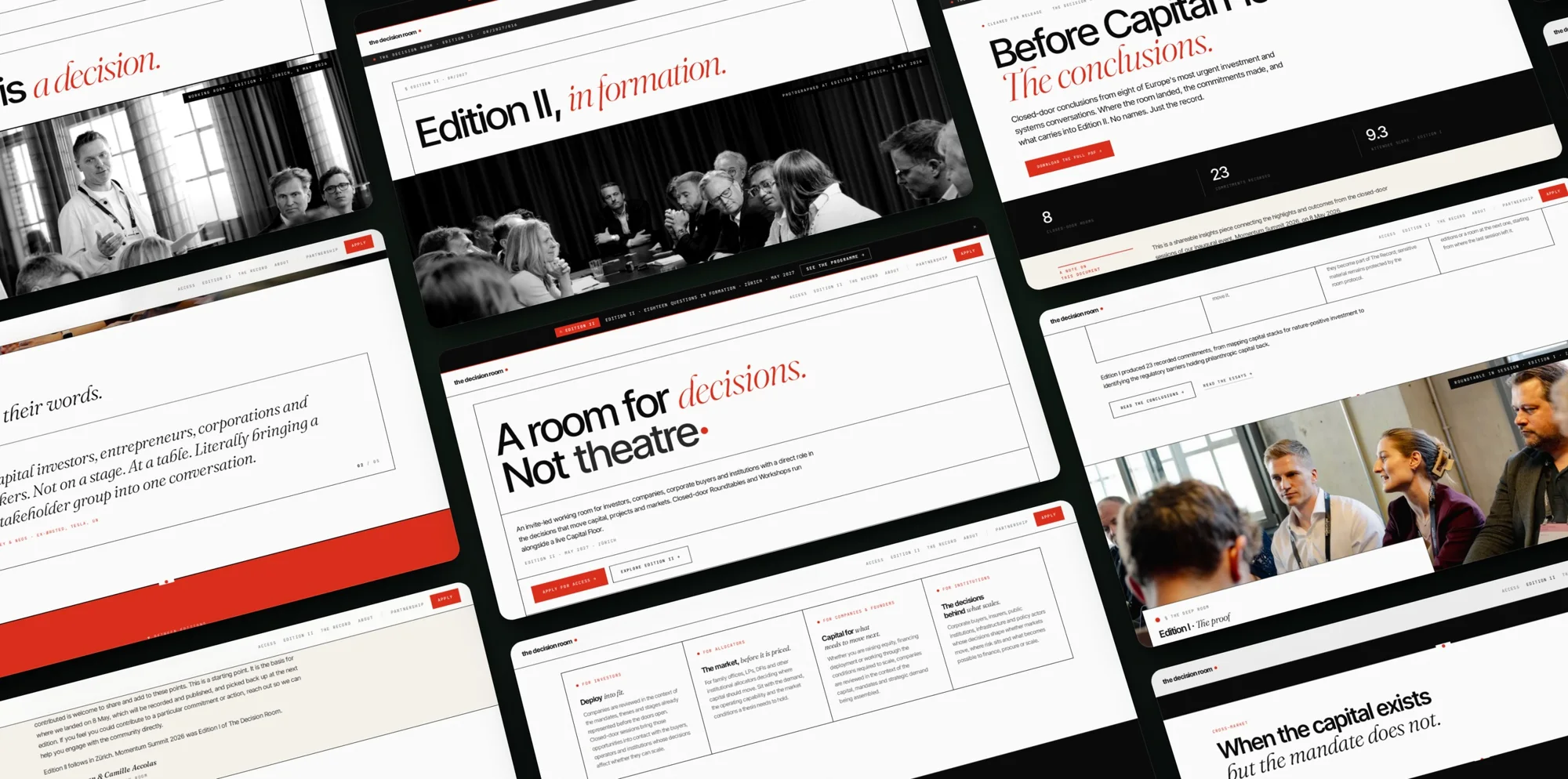
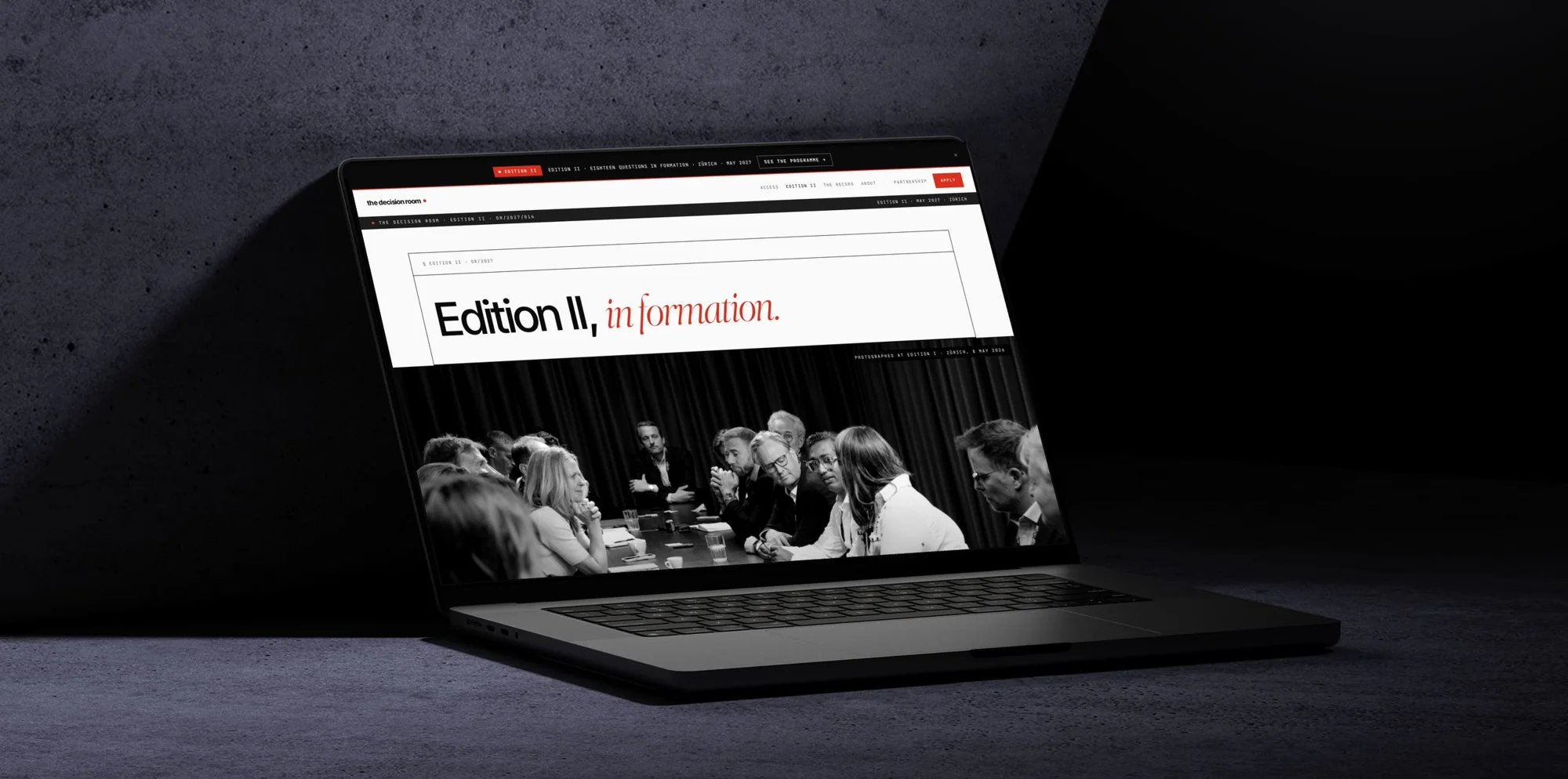
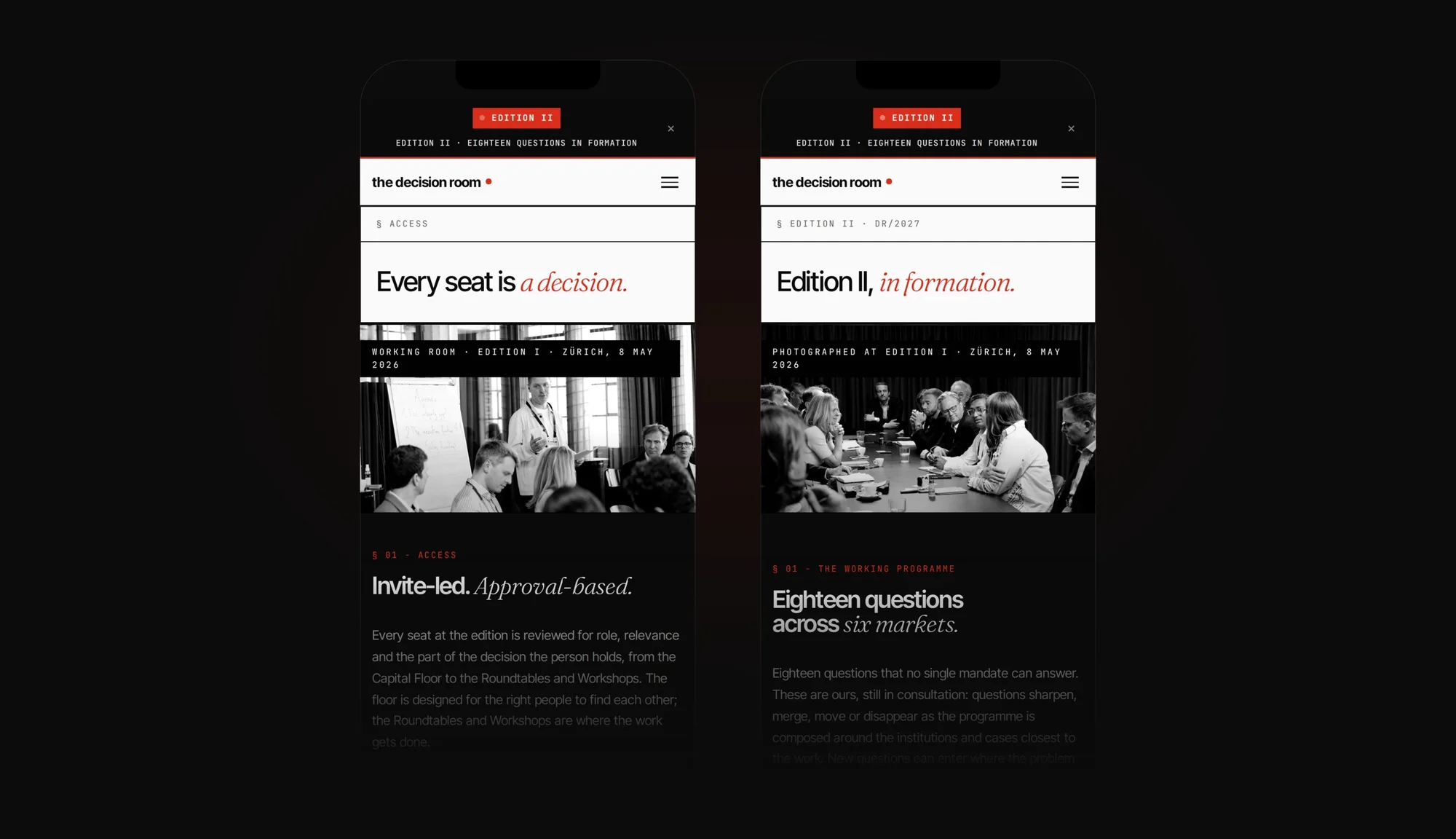
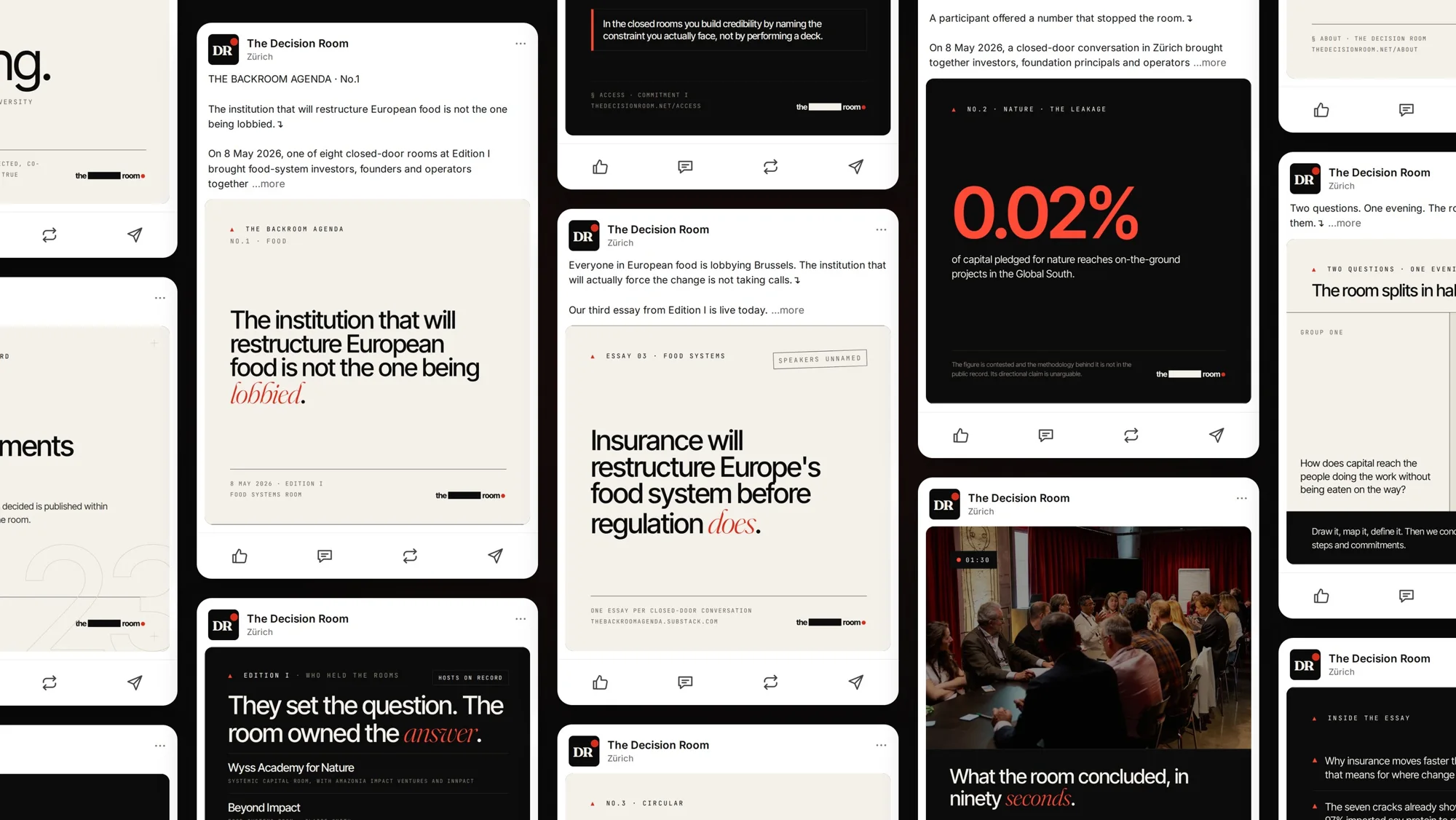
The website has to explain the model, show what is still forming, route different participants and carry the organisation between Editions. It grew from a single page in May to an 18-page site by September, with a published record of Edition I and an essay for each room.
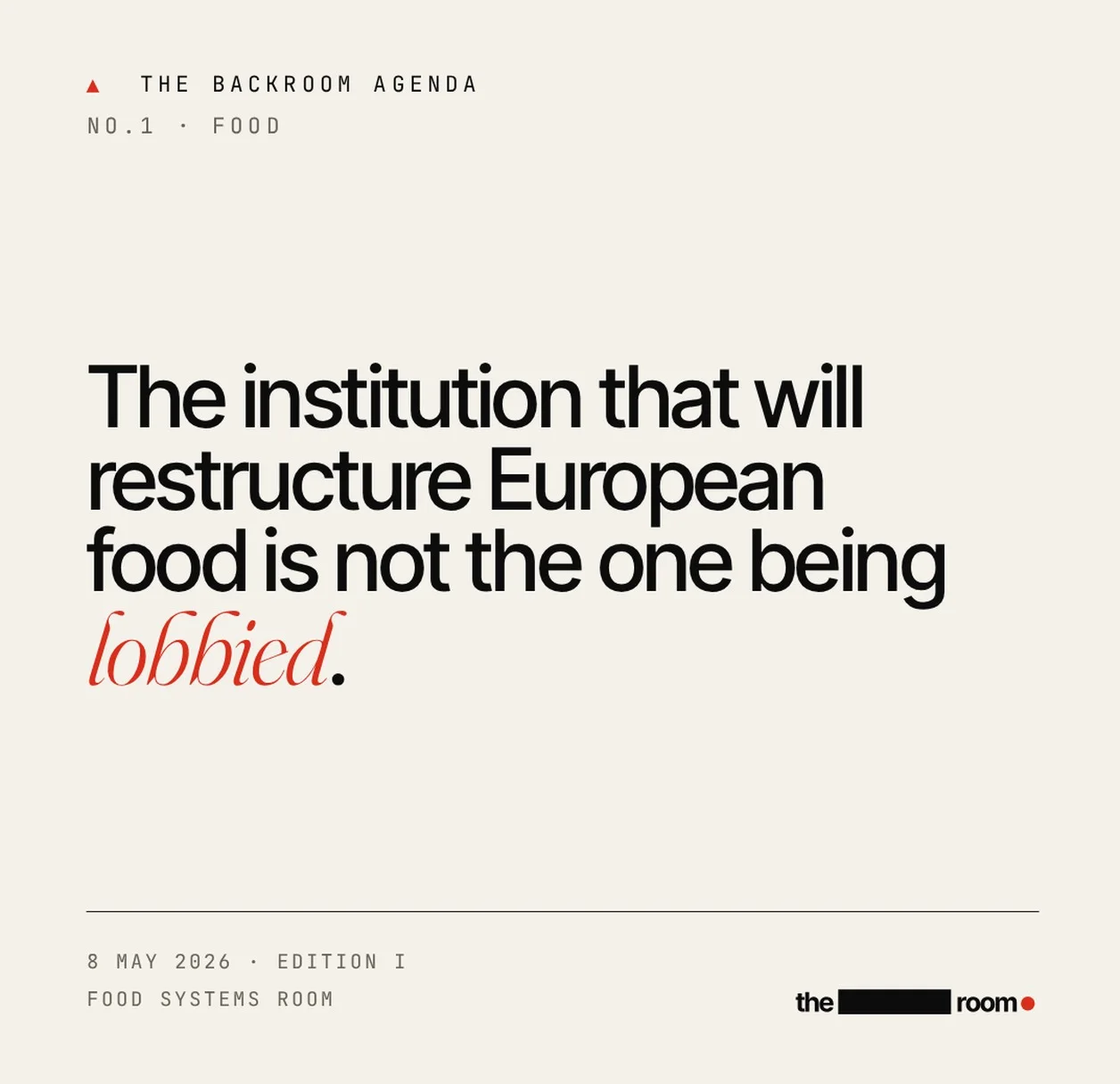
The identity reads closer to an institution than an event campaign. A redacted wordmark, room codes, numbered sections and working documents carry across the programme, the site, the protocols and the Back Tables. Photography runs in black and white with small plate stamps, so the people in the rooms stay central.
04 · Independence
Independence had to be designed.
A working institution needs a commercial model. The harder question was how to build one without letting the commercial relationship decide what the room concludes. That question produced the organisation’s clearest operating rule.
Partners shape the question. The room owns the answer.
A partner can
- Help name a live constraint
- Bring evidence and expertise
- Help assemble the people needed
A partner cannot
- Buy a conclusion
- Attribute what the room said
- Publish without review
The rule shaped the partner model, the facilitator’s role, recording, publication and the Room Protocol. Sessions run under the Chatham House Rule, conclusions are published without names apart from the hosts, and commitments are recorded and carried forward.
- Confidentiality
- Independence
- Recording
- Evidence
- Publication
05 · The output
Somewhere for the work to go.
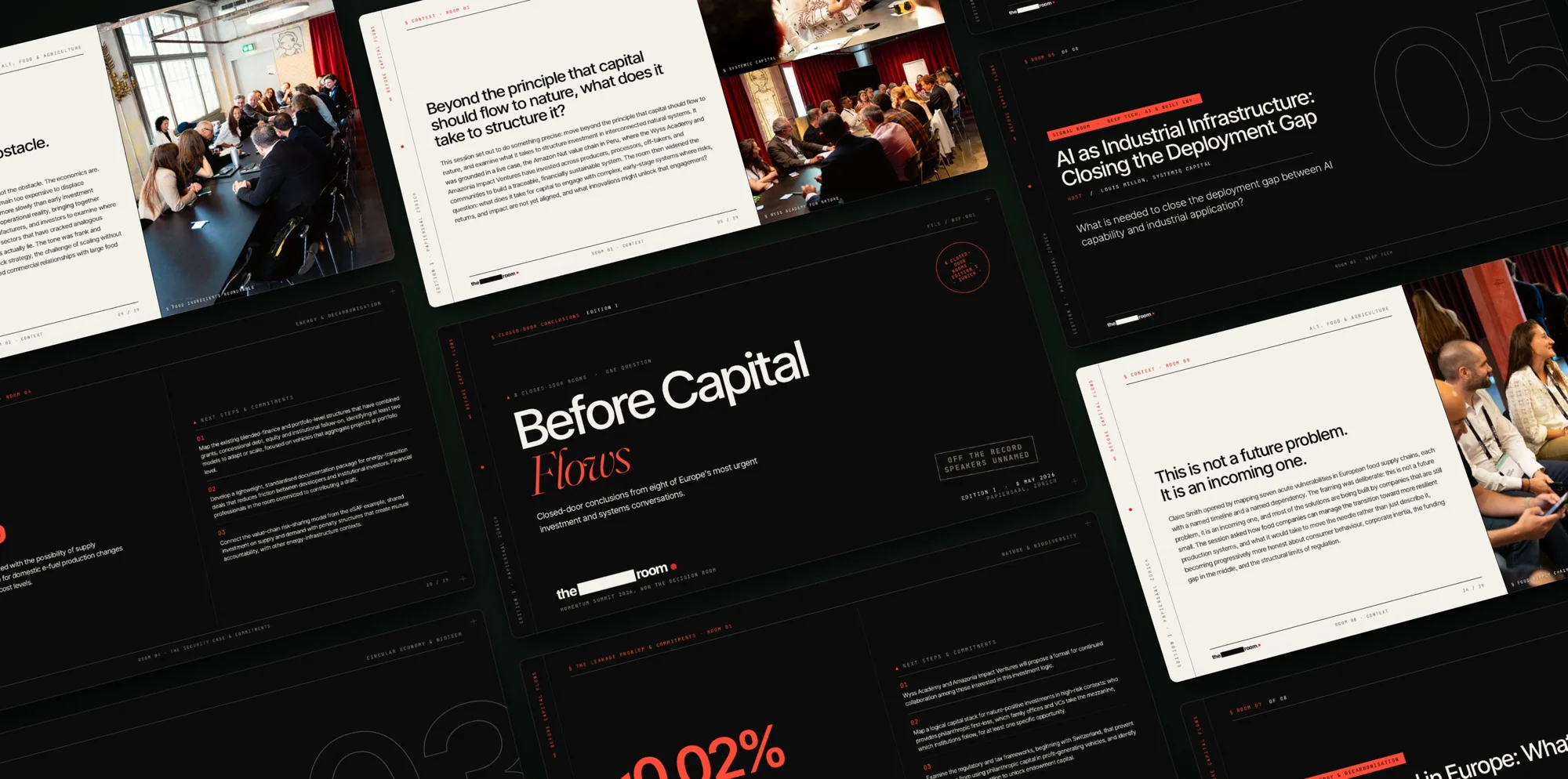
A good conversation and a useful output are different things. Each room has facilitation, production and recording support, and a Room Output Sheet captures what happened. Some rooms end in agreement. Others end in a sharper disagreement, a missing piece of evidence or a dependency that has finally come into view. The sheet keeps each of those as it is.
Edition I’s record, Before Capital Flows, collects eight rooms and 23 numbered commitments in a 39-page report.
Room Output SheetDR · Edition II
06 · Edition I to Edition II
Tested, then systematised.
Edition I tested the model. Edition II, planned for Zürich in May 2027, makes each part of the operating model explicit.
| Area | Edition I · Tested | Edition II · Systematised |
|---|---|---|
| Programme | Rooms around five clusters | Rooms built from a stated constraint |
| Routing | Introductions on the day | Positions mapped before the day |
| Outputs | Notes from each room | A Room Output Sheet in every room |
| Protocol | Chatham House Rule | A written Room Protocol |
| Continuity | A published record and essays | The Record and Back Tables between Editions |
07 · Why it is here
Strategy becomes real in the operating model.
The work ran past positioning, identity and a website. The same idea had to hold across the programme, the commercial model, the partner offer, participant routing, room rules, editorial and production.
We bring the same standard to client work. Start with the operating problem, build the system around it, then let the brand express what the organisation does.
From the LibraryHow One Positioning Survives Different Rooms